🕒 10-12 min read • Updated: July 2026
Table of Contents
Introduction
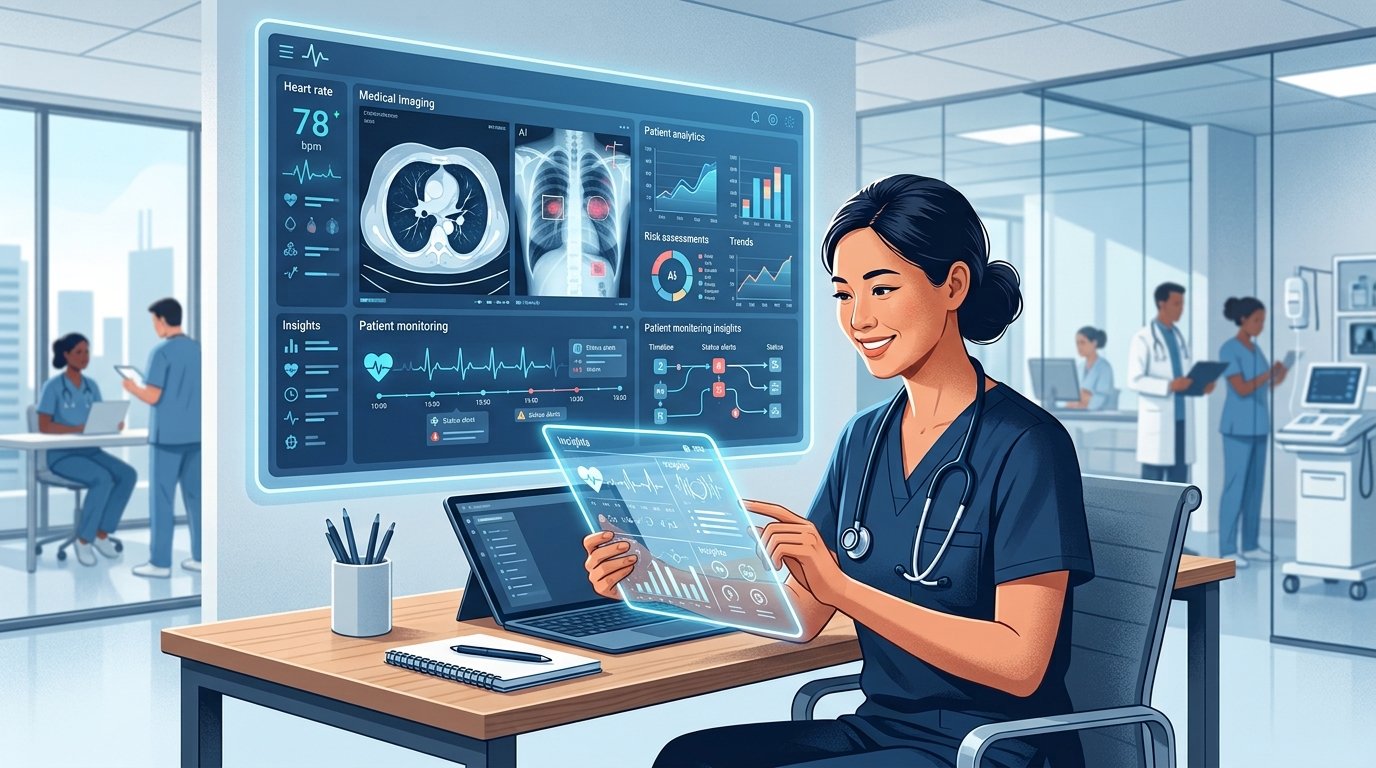
Artificial Intelligence (AI) is transforming healthcare in ways that were difficult to imagine just a few years ago. From helping doctors detect diseases earlier to monitoring patients remotely and creating personalized treatment plans, AI is becoming an important part of modern patient care. Rather than replacing healthcare professionals, AI acts as a powerful assistant that helps medical teams make faster, more informed decisions while improving the quality of care patients receive.
Whether you’re a student, healthcare professional, business leader, or simply curious about AI, understanding how AI is changing patient care is becoming increasingly important. Hospitals, clinics, and healthcare organizations worldwide are already using AI to improve outcomes, reduce medical errors, and make healthcare more accessible.
In this beginner-friendly guide, you’ll learn what AI in patient care is, how it works, its benefits, real-world applications, challenges, and what the future may hold for patients and healthcare providers.
Quick Answer
AI in patient care refers to the use of artificial intelligence technologies to assist healthcare professionals in diagnosing diseases, monitoring patients, recommending treatments, and improving overall healthcare delivery. AI analyzes large amounts of medical data to help doctors and nurses make faster, more accurate decisions while supporting personalized and proactive patient care.
Key Takeaways
- AI supports healthcare professionals by improving decision-making and patient outcomes.
- Hospitals use AI for diagnosis, patient monitoring, personalized treatment, and administrative efficiency.
- AI enables earlier disease detection and continuous monitoring through smart devices.
- Human expertise remains essential, as AI is designed to assist—not replace—medical professionals.
- Responsible AI requires strong data privacy, transparency, and ethical oversight.
What Is AI in Patient Care?
AI in patient care is the application of artificial intelligence technologies to improve how patients are diagnosed, treated, monitored, and supported throughout their healthcare journey.
Unlike traditional software that follows fixed instructions, AI systems can analyze enormous amounts of medical information, recognize patterns, and generate insights that help healthcare professionals make better clinical decisions.
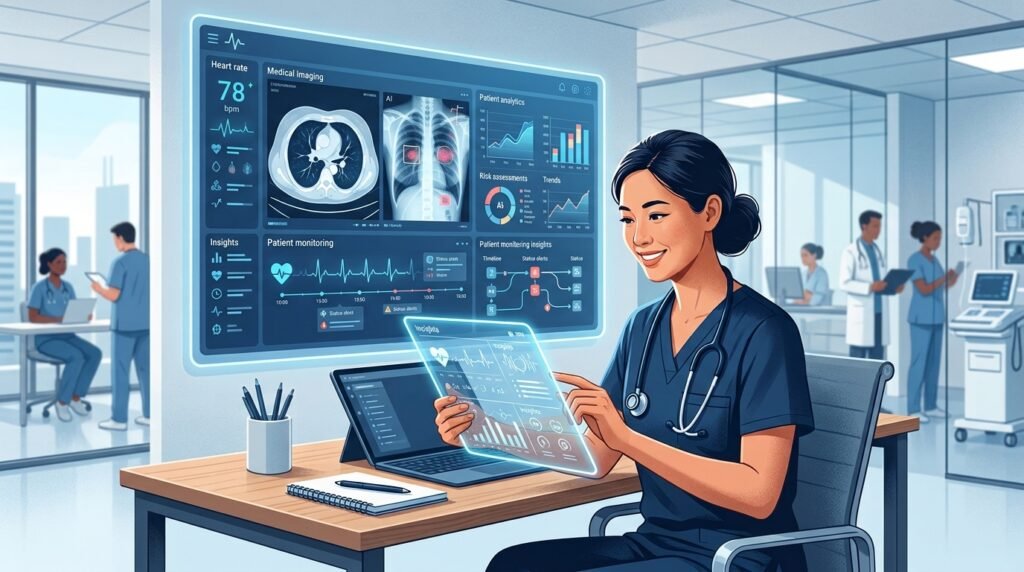
For example, an AI system can compare thousands of medical images within seconds to identify abnormalities that may indicate diseases such as cancer or pneumonia. It can also monitor a patient’s vital signs continuously and alert healthcare staff if there are early signs of deterioration.
Instead of replacing doctors or nurses, AI serves as an intelligent decision-support system that allows healthcare teams to focus more on patient care while reducing repetitive administrative work.
| Traditional Patient Care | AI-Assisted Patient Care |
|---|---|
| Periodic patient monitoring | Continuous real-time monitoring |
| Manual record analysis | Automated data analysis |
| Standard treatment plans | Personalized recommendations |
| Reactive healthcare | Predictive healthcare |
| Manual scheduling | AI-assisted workflow automation |
Why AI Is Becoming Important in Patient Care
Healthcare systems around the world face growing challenges, including increasing patient populations, staff shortages, rising healthcare costs, and the need for faster, more accurate diagnoses.
AI helps address these challenges by improving efficiency without compromising the quality of care.
Some of the key reasons healthcare providers are adopting AI include:
- Growing demand for healthcare services
- Increasing amounts of patient data
- Need for faster diagnosis
- Rising administrative workload
- Demand for personalized treatment
- Expansion of telemedicine and remote care
As healthcare becomes more data-driven, AI provides valuable insights that would be difficult for humans to process manually.
How AI Works in Patient Care
AI systems learn by analyzing large datasets collected from healthcare environments.
These datasets may include:
- Electronic Health Records (EHRs)
- Laboratory reports
- Medical images
- Wearable device data
- Prescription history
- Genetic information
- Clinical research data
Using machine learning algorithms, AI identifies patterns and relationships within this data.
Healthcare professionals then use these insights to support clinical decisions rather than relying solely on manual analysis.
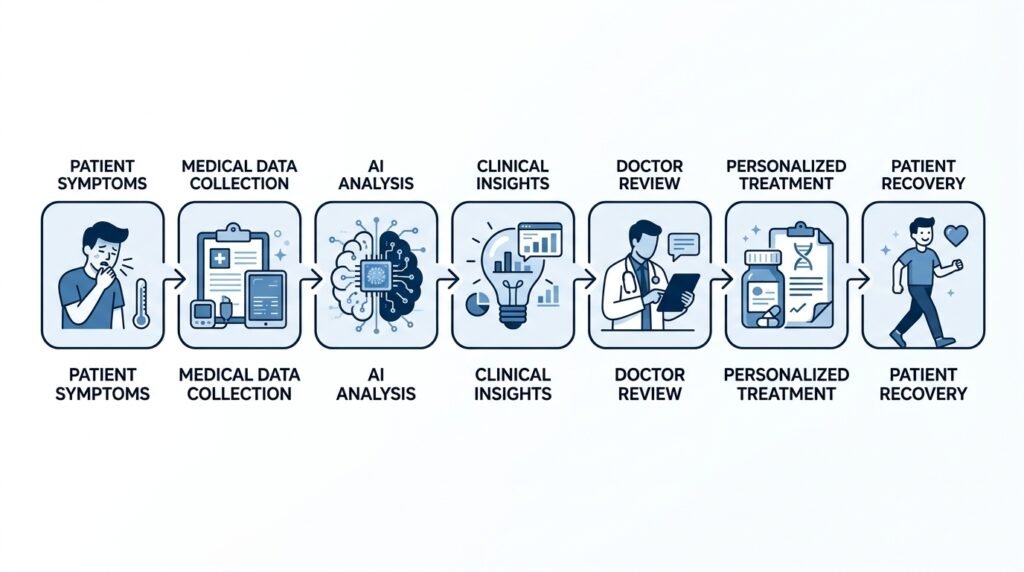
A simplified workflow looks like this:
Patient Data → AI Analysis → Clinical Insights → Doctor’s Decision → Patient Care
This collaboration between AI and healthcare professionals helps improve both speed and accuracy while keeping human expertise at the center of medical decision-making.
Benefits of AI in Patient Care
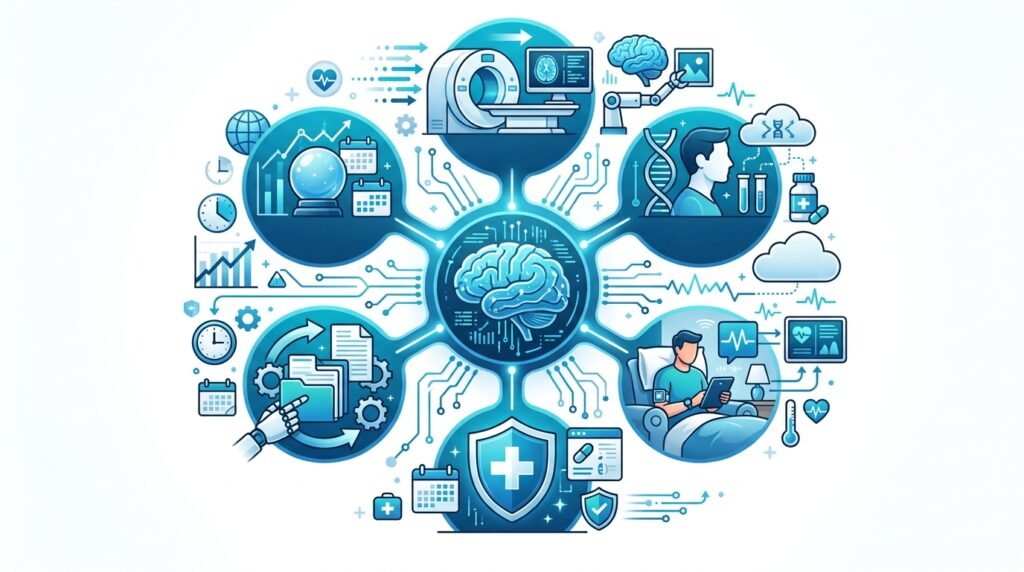
Artificial intelligence offers numerous advantages for patients, healthcare providers, and hospitals. While its impact continues to grow, several benefits are already transforming modern healthcare.
1. Earlier Disease Detection
One of AI’s greatest strengths is recognizing patterns that may be difficult for humans to detect.
AI-powered systems can analyze:
- X-rays
- MRI scans
- CT scans
- Blood test results
- Pathology images
to identify potential health conditions earlier.
Early diagnosis often leads to:
- Faster treatment
- Better recovery rates
- Lower healthcare costs
- Improved patient outcomes
For diseases such as breast cancer, diabetic retinopathy, and lung conditions, early detection can significantly improve treatment success.
2. Personalized Treatment Plans
Every patient has unique medical needs.
Factors such as age, genetics, medical history, lifestyle, allergies, and existing health conditions all influence treatment decisions.
AI can analyze these variables together and help healthcare providers recommend treatment plans tailored to individual patients.
Instead of using a one-size-fits-all approach, AI supports more personalized healthcare that can improve treatment effectiveness and reduce unnecessary interventions.
3. Remote Patient Monitoring
Traditionally, healthcare providers could only assess a patient’s condition during scheduled appointments or hospital stays. Today, AI-powered remote patient monitoring is changing that by enabling continuous observation of patients, even when they are at home.
Smart wearable devices and connected medical equipment can collect real-time health data, including:
- Heart rate
- Blood pressure
- Blood glucose levels
- Oxygen saturation (SpO₂)
- Sleep quality
- Physical activity
- Body temperature
AI analyzes this information continuously and identifies unusual patterns that may indicate a developing health issue. If the system detects abnormalities, it can automatically alert healthcare professionals so they can intervene before the condition worsens.
This technology is especially valuable for managing chronic conditions such as diabetes, heart disease, hypertension, and chronic respiratory illnesses.
Example
A patient with heart failure wears a smart monitoring device at home. AI detects subtle changes in heart rate and blood pressure that suggest a higher risk of hospitalization. The healthcare team receives an alert and adjusts the patient’s treatment before the condition becomes critical.
4. Faster and More Accurate Diagnosis
Accurate diagnosis is the foundation of effective patient care. However, healthcare professionals often need to review large volumes of medical records, imaging scans, laboratory reports, and clinical notes before reaching a diagnosis.
AI helps by rapidly analyzing this information and highlighting patterns that may indicate specific diseases.
For example, AI can assist in:
- Detecting pneumonia from chest X-rays
- Identifying fractures in medical images
- Recognizing early signs of diabetic retinopathy
- Supporting skin cancer detection
- Prioritizing urgent medical cases
It’s important to understand that AI does not replace medical judgment. Instead, it provides additional insights that help doctors make more informed decisions.
Traditional Diagnosis vs AI-Assisted Diagnosis
| Traditional Diagnosis | AI-Assisted Diagnosis |
| Manual review of patient data | Rapid analysis of large datasets |
| Time-consuming | Faster clinical insights |
| Limited by human workload | Processes thousands of records quickly |
| Higher chance of overlooking subtle patterns | Detects hidden patterns and anomalies |
| Final decision by doctor | AI supports the doctor’s final decision |
5. Personalized Treatment Recommendations
No two patients are exactly alike. Even individuals with the same disease may respond differently to treatment.
AI helps healthcare professionals develop personalized treatment plans by analyzing factors such as:
- Medical history
- Current symptoms
- Previous treatments
- Laboratory results
- Lifestyle
- Genetic information (where available)
By combining these data points, AI can recommend treatment options that are more likely to be effective for a specific patient.
This approach supports the growing field of precision medicine, where healthcare decisions are tailored to individual patient characteristics rather than generalized treatment protocols.
6. Predictive Analytics for Better Patient Outcomes
One of AI’s most valuable capabilities is predicting health risks before they become serious.
Predictive analytics uses historical and real-time patient data to estimate the likelihood of future health events.
Healthcare providers use AI to identify patients at higher risk of:
- Sepsis
- Heart attacks
- Stroke
- Hospital readmission
- Disease progression
- Medication complications
Early identification allows medical teams to intervene sooner, often preventing severe complications and improving patient outcomes.
Example
An AI system reviews hospital records and identifies patients who have a high probability of being readmitted within 30 days after discharge. Healthcare providers can then schedule follow-up appointments, adjust medications, or provide additional support to reduce that risk.
7. Medication Management and Patient Safety
Medication errors remain a significant challenge in healthcare. Incorrect dosages, drug interactions, or overlooked allergies can affect patient safety.
AI helps reduce these risks by assisting healthcare professionals with medication management.
AI systems can:
- Detect potential drug interactions
- Flag allergy-related concerns
- Recommend dosage adjustments
- Monitor medication adherence
- Identify duplicate prescriptions
These capabilities improve patient safety while reducing preventable medical errors.
Real-World Applications of AI in Patient Care
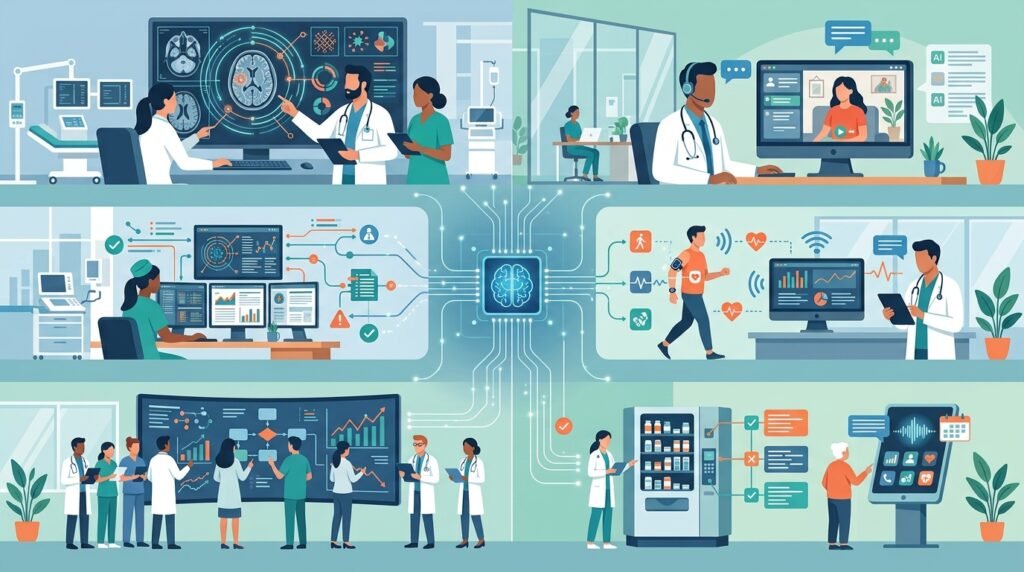
AI is already being used in hospitals, clinics, and healthcare systems around the world. Here are some of its most common applications.
| Application | How AI Helps |
| Medical Imaging | Detects abnormalities in X-rays, CT scans, and MRIs |
| Remote Patient Monitoring | Tracks patient health continuously from home |
| Virtual Health Assistants | Answers patient questions and schedules appointments |
| Clinical Decision Support | Assists doctors with diagnosis and treatment planning |
| Medication Management | Identifies drug interactions and improves safety |
| Predictive Analytics | Predicts health risks before complications occur |
| Hospital Operations | Improves patient flow and resource allocation |
Benefits of AI in Patient Care
The growing adoption of AI is improving healthcare in several important ways.
Improved Diagnostic Accuracy
AI helps healthcare professionals identify diseases more accurately by analyzing large volumes of medical data.
Faster Clinical Decisions
By processing information within seconds, AI reduces delays in diagnosis and treatment planning.
Better Patient Experience
Patients benefit from personalized care, shorter waiting times, and continuous health monitoring.
Enhanced Efficiency
AI automates repetitive administrative tasks, allowing healthcare professionals to spend more time with patients.
Better Access to Healthcare
Remote monitoring and virtual health assistants make healthcare more accessible, especially for patients in rural or underserved areas.
Lower Healthcare Costs
Earlier diagnosis, preventive care, and efficient resource management can help reduce long-term healthcare expenses.

Challenges of AI in Patient Care
Despite its benefits, AI also presents several challenges that healthcare organizations must address responsibly.
Data Privacy and Security
Healthcare data is highly sensitive. Organizations must ensure that patient information is protected through strong cybersecurity measures and compliance with healthcare regulations.
Algorithm Bias
AI systems learn from historical data. If that data contains bias or lacks diversity, AI recommendations may not be equally accurate for all patient populations.
Human Oversight
AI should support—not replace—clinical judgment. Healthcare professionals remain responsible for interpreting AI recommendations and making final treatment decisions.
Implementation Costs
Adopting AI often requires investment in technology, staff training, and infrastructure, which may be challenging for smaller healthcare organizations.
The Future of AI in Patient Care
Artificial intelligence is still evolving, but its role in healthcare is expected to grow significantly over the next decade. As AI systems become more accurate, transparent, and integrated with healthcare technologies, they will help deliver more proactive, personalized, and efficient patient care.
Here are some of the most promising developments expected in the future.
Personalized Medicine
Healthcare is moving away from a one-size-fits-all approach.
AI will help doctors create highly personalized treatment plans by analyzing a patient’s:
- Medical history
- Lifestyle
- Genetic information
- Previous treatments
- Response to medications
This could lead to treatments that are more effective while reducing unnecessary side effects.
Predictive Healthcare
Instead of treating diseases after symptoms appear, AI will increasingly help healthcare providers predict health risks before they become serious.
For example, AI may identify early signs of:
- Heart disease
- Diabetes complications
- Stroke
- Kidney disease
- Mental health conditions
Earlier intervention can improve patient outcomes while lowering healthcare costs.
Smarter Remote Care
Telemedicine has already transformed healthcare access. AI will make remote care even more effective by continuously monitoring patient health through wearable devices and connected medical equipment.
Patients with chronic illnesses may receive personalized recommendations, medication reminders, and early alerts without needing frequent hospital visits.
AI-Assisted Clinical Decision Support
Future AI systems will provide healthcare professionals with even more comprehensive decision support by combining information from:
- Medical imaging
- Electronic health records
- Laboratory reports
- Clinical guidelines
- Research publications
This will help doctors evaluate treatment options more efficiently while maintaining full control over patient care decisions.
Administrative Automation
Healthcare professionals spend a significant amount of time on documentation and administrative work.
AI is expected to automate tasks such as:
- Medical documentation
- Appointment scheduling
- Insurance processing
- Clinical note summarization
- Patient follow-up reminders
Reducing administrative workload allows doctors and nurses to spend more time with patients.
Best Practices for Responsible AI in Patient Care
While AI offers significant benefits, responsible implementation is essential for maintaining patient trust and ensuring safe healthcare delivery.
Healthcare organizations should follow these best practices:
Protect Patient Privacy
Patient information should be stored securely and handled according to healthcare privacy regulations. Strong cybersecurity practices help protect sensitive medical data from unauthorized access.
Keep Humans in the Loop
AI should support healthcare professionals—not replace them.
Doctors and nurses should always review AI recommendations before making important medical decisions.
Monitor AI Performance
Healthcare organizations should regularly evaluate AI systems to ensure they remain accurate, reliable, and free from unexpected errors.
Continuous monitoring also helps identify opportunities for improvement.
Reduce Bias
AI systems should be trained using diverse and representative healthcare data to minimize bias and improve fairness across different patient populations.
Maintain Transparency
Healthcare providers should clearly explain when AI is being used to assist patient care and communicate that final decisions remain under human supervision.
Transparency helps build patient confidence in AI-assisted healthcare.
Common Misconceptions About AI in Patient Care
Despite its rapid adoption, several misconceptions about AI continue to create confusion.
Myth 1: AI Will Replace Doctors
Reality: AI is designed to assist healthcare professionals, not replace them. Human expertise, empathy, communication, and ethical judgment remain irreplaceable in patient care.
Myth 2: AI Is Always Accurate
Reality: AI can improve decision-making, but it is not perfect. Its recommendations depend on the quality of the data it receives and should always be reviewed by qualified medical professionals.
Myth 3: AI Only Benefits Large Hospitals
Reality: Cloud-based AI services and affordable healthcare technologies are making AI increasingly accessible to smaller clinics, private practices, and rural healthcare providers.
Myth 4: AI Makes Healthcare Less Personal
Reality: By automating routine tasks, AI gives healthcare professionals more time to focus on patient communication, education, and personalized care.
Frequently Asked Questions
What is AI in patient care?
AI in patient care refers to the use of artificial intelligence technologies to help healthcare professionals diagnose diseases, monitor patients, recommend treatments, and improve healthcare delivery through data-driven insights.
How does AI improve patient care?
AI improves patient care by supporting earlier diagnosis, personalized treatment planning, remote patient monitoring, medication safety, and faster clinical decision-making.
Is AI replacing doctors and nurses?
No. AI is designed to assist healthcare professionals by analyzing data and providing insights. Doctors and nurses remain responsible for diagnosing conditions, making treatment decisions, and caring for patients.
What are examples of AI in patient care?
Common examples include:
- AI-assisted medical imaging
- Remote patient monitoring
- Virtual health assistants
- Predictive analytics
- Medication management
- Clinical decision support systems
Is AI in healthcare safe?
When implemented responsibly with strong privacy protections, regulatory compliance, and human oversight, AI can improve patient safety and healthcare quality.
What are the challenges of AI in patient care?
Some challenges include:
- Data privacy
- Cybersecurity risks
- Algorithm bias
- Implementation costs
- Regulatory compliance
- Need for continuous human oversight

Conclusion
Artificial intelligence is transforming patient care by helping healthcare professionals deliver faster, more accurate, and more personalized medical services. From early disease detection and remote patient monitoring to predictive analytics and treatment planning, AI is improving healthcare outcomes while supporting doctors and nurses in their daily work.
However, successful adoption depends on responsible implementation. AI should complement—not replace—the expertise, empathy, and ethical judgment of healthcare professionals. Protecting patient privacy, reducing bias, and maintaining transparency will remain essential as AI becomes more integrated into healthcare systems.
As technology continues to evolve, AI has the potential to make healthcare more proactive, accessible, and patient-centered. Organizations that embrace AI responsibly will be better positioned to improve both the quality and efficiency of care while delivering better experiences for patients.
Continue Your AI Journey
Keep building your AI knowledge with these beginner-friendly guides.
-
AI in Patient Care (2026): 7 Clinical Workflows Transforming Patient Outcomes
Learn more : AI in Patient Care (2026): 7 Clinical Workflows Transforming Patient Outcomes🕒 10-12 min read • Updated: July 2026 Introduction Artificial Intelligence (AI) is transforming healthcare in ways that…
-

AI in Drug Discovery: 7 Ways AI Is Changing Medicine in 2026
Learn more : AI in Drug Discovery: 7 Ways AI Is Changing Medicine in 2026🕒 10-12 min read • Updated: July 2026 introduction Artificial intelligence (AI) is transforming industries worldwide, and healthcare…
-

AI in Medical Diagnosis (2026): 5 Proven Workflows Saving Time & Cutting Diagnostic Errors
Learn more : AI in Medical Diagnosis (2026): 5 Proven Workflows Saving Time & Cutting Diagnostic Errors🕒 12 min read • Updated: July 2026 Introduction Artificial intelligence (AI) is no longer a futuristic concept…
-

AI in Healthcare Explained: A Complete Beginner’s Guide
Learn more : AI in Healthcare Explained: A Complete Beginner’s Guide🕒 10-12 min read • Updated: July 2026 Introduction Every day, hospitals generate enormous amounts of medical data—from…
Related Articles
Explore more guides and resources related to this topic.
-

ChatGPT Complete Guide for Beginners (2026): Master AI Step-by-Step
Learn more : ChatGPT Complete Guide for Beginners (2026): Master AI Step-by-Step🕒 20-25 min read • Updated: Aug 2026 Introduction Introduction Artificial intelligence is changing how people learn, work,…
-

Master Prompt Engineering in 2026: A Step-by-Step Beginner’s Guide
Learn more : Master Prompt Engineering in 2026: A Step-by-Step Beginner’s Guide🕒 18-20 min read • Updated: Aug 2026 Introduction Artificial intelligence (AI) tools like ChatGPT, Claude, Gemini, and…
-
Large Language Models (LLMs) Explained: The Complete 2026 Beginner’s Guide
Learn more : Large Language Models (LLMs) Explained: The Complete 2026 Beginner’s Guide🕒 14-16 min read • Updated: Aug 2026 Introduction Artificial Intelligence has become part of everyday life. Whether…
-

Best AI Image Generators in 2026: 10 Free & Paid Tools Tested
Learn more : Best AI Image Generators in 2026: 10 Free & Paid Tools Tested🕒 15 min read • Updated: July 2026 introduction Creating stunning images no longer requires years of design…
-
10 Best AI Chatbots in 2026: Tested & Ranked for Every Use Case
Learn more : 10 Best AI Chatbots in 2026: Tested & Ranked for Every Use Case🕒 10-12 min read • Updated: July 2026 introduction Artificial intelligence has made chatbots far more capable than…
-
ChatGPT vs Microsoft Copilot (2026): Tested, Pricing & Workflow Comparison
Learn more : ChatGPT vs Microsoft Copilot (2026): Tested, Pricing & Workflow Comparison🕒 10-12 min read • Updated: July 2026 Introduction Choosing between ChatGPT and Microsoft Copilot can be challenging,…
References
- World Health Organization. Ethics and Governance of Artificial Intelligence for Health. https://www.who.int/publications/i/item/9789240029200
- U.S. Food and Drug Administration. Artificial Intelligence and Machine Learning in Medical Devices. https://www.fda.gov/medical-devices/software-medical-device-samd/artificial-intelligence-and-machine-learning-software-medical-device
- National Institutes of Health. https://www.nih.gov
- OECD AI Policy Observatory. https://oecd.ai
- Nature Portfolio – Artificial Intelligence Research. https://www.nature.com/subjects/artificial-intelligence
- The Lancet Digital Health. https://www.thelancet.com/journals/landig/home
- PubMed. https://pubmed.ncbi.nlm.nih.gov
Leave a Reply