🕒 12 min read • Updated: July 2026
Table of Contents
Introduction
Artificial intelligence (AI) is no longer a futuristic concept in healthcare. Today, hospitals, clinics, and research institutions worldwide use AI to help detect diseases, analyze medical images, and support doctors in making faster and more accurate diagnoses.
Imagine an AI system that can identify early signs of lung cancer from a CT scan, detect diabetic eye disease before symptoms appear, or alert doctors to the possibility of a stroke within minutes. These are no longer experimental ideas—they are real-world applications already improving patient care.
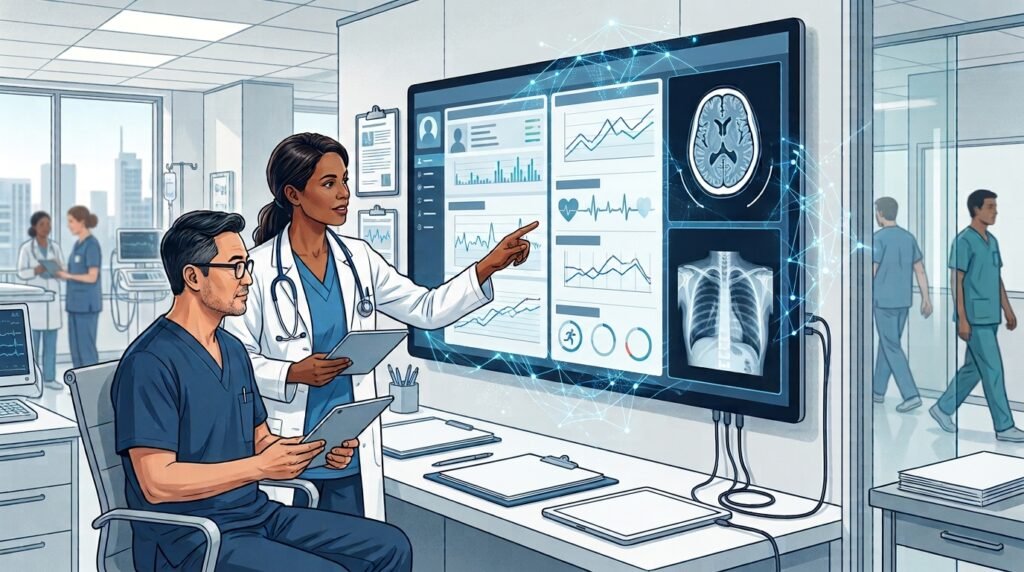
However, AI is not replacing doctors. Instead, it acts as an intelligent assistant that processes vast amounts of medical data, recognizes patterns that may be difficult for humans to spot, and provides decision support. The final diagnosis and treatment decisions remain in the hands of qualified healthcare professionals.
As healthcare systems face growing patient populations, increasing medical data, and rising demand for accurate diagnoses, AI is becoming one of the most valuable technologies for improving efficiency, reducing diagnostic errors, and enabling earlier disease detection.
In this beginner-friendly guide, you’ll learn:
- What AI in medical diagnosis is
- How AI-assisted diagnosis works
- Real-world examples across different medical specialties
- Benefits and limitations of AI in healthcare
- Common challenges and ethical considerations
- What the future of AI-powered diagnosis may look like
Whether you’re a student, healthcare professional, or simply curious about artificial intelligence, this guide will help you understand how AI is transforming one of the world’s most important industries.
Quick Answer
AI in medical diagnosis is the use of artificial intelligence to analyze medical data—such as X-rays, CT scans, MRI images, pathology slides, laboratory reports, and patient records—to help healthcare professionals detect diseases, identify abnormalities, and support clinical decision-making. AI improves speed and consistency but is designed to assist doctors rather than replace them.
Key Takeaways
- AI helps healthcare professionals identify diseases earlier and more accurately.
- Modern AI systems can analyze medical images, laboratory results, and electronic health records.
- AI supports doctors by providing diagnostic insights, not final medical decisions.
- Hospitals already use AI in radiology, pathology, ophthalmology, cardiology, and emergency medicine.
- Challenges such as data privacy, bias, transparency, and regulatory oversight remain important considerations.
What Is AI in Medical Diagnosis?
Artificial intelligence in medical diagnosis refers to the use of computer systems that can analyze medical information, recognize patterns, and generate insights to help identify diseases or health conditions.
Instead of relying solely on manual interpretation, doctors can use AI-powered software to review medical images, laboratory reports, patient histories, and other clinical data much more quickly. These systems are trained on large datasets containing thousands—or even millions—of previous medical cases, enabling them to recognize subtle patterns that may indicate a particular disease.
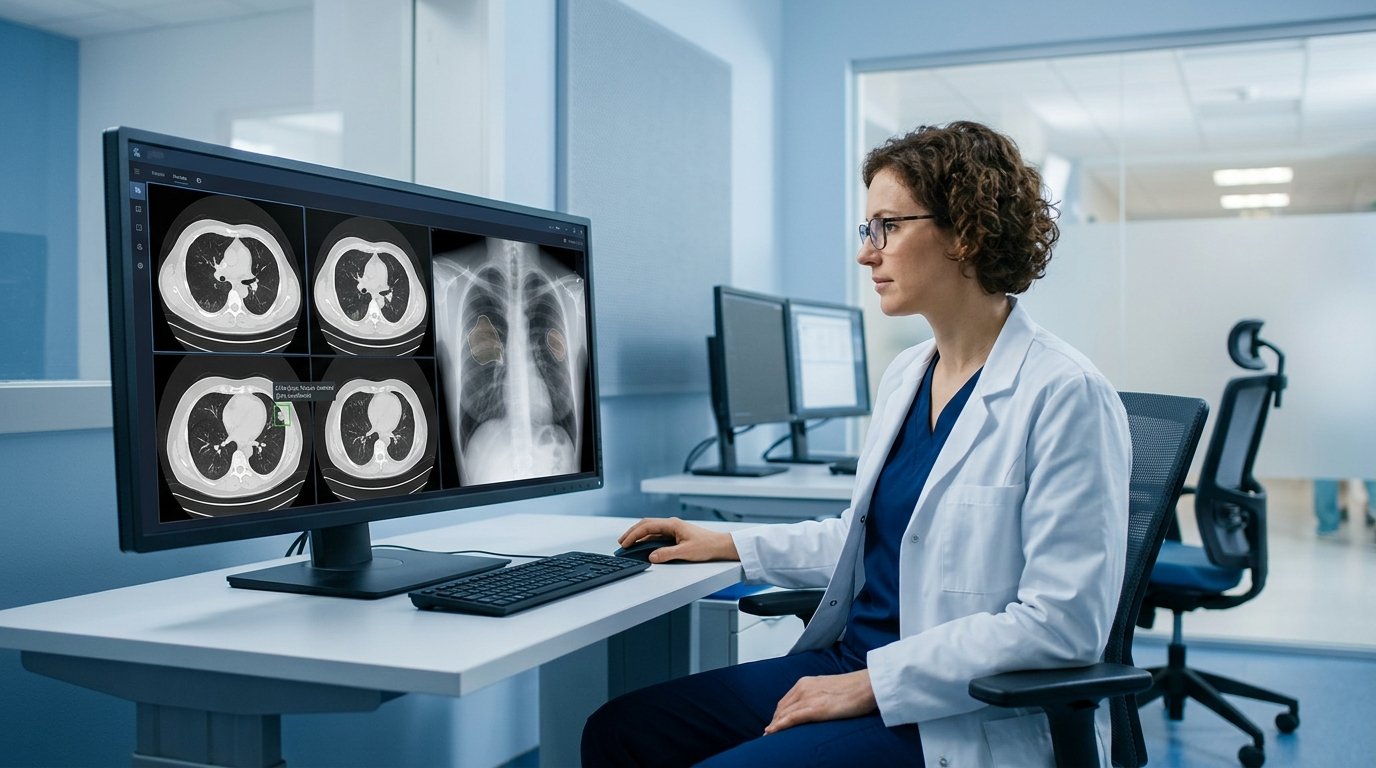
For example, an AI system trained to analyze chest X-rays can learn to identify patterns associated with pneumonia or lung cancer by comparing a new image with many previously diagnosed cases. It can then highlight areas of concern for the radiologist to review.
It’s important to understand that AI does not diagnose patients independently in routine clinical practice. Instead, it provides recommendations and decision support that healthcare professionals use alongside their medical expertise, patient history, physical examination, and additional tests.
Think of AI as a highly capable medical assistant—one that can process enormous amounts of information in seconds but still relies on experienced clinicians to make the final diagnosis and treatment decisions.
How Does AI in Medical Diagnosis Work?
Artificial intelligence doesn’t think like a human doctor. Instead, it learns by analyzing vast amounts of medical data and identifying patterns that are often too subtle or time-consuming for people to detect consistently.
A typical AI-assisted diagnosis follows five main steps.
1. Collecting Medical Data
Everything begins with patient data.
Depending on the medical condition, AI systems can analyze information from multiple sources, including:
- X-rays
- CT scans
- MRI scans
- Ultrasound images
- Blood test results
- Electronic Health Records (EHRs)
- Pathology slides
- Electrocardiograms (ECGs)
- Genetic information
- Vital signs from wearable devices
The more high-quality data an AI system has access to, the more accurate its predictions can become.
2. Processing and Analyzing the Data
Once the information is collected, AI uses machine learning and deep learning algorithms to process it.
Instead of simply looking at an image like a person would, AI converts medical data into mathematical patterns. It then compares these patterns with millions of previously analyzed cases to identify similarities and detect abnormalities.
For example, an AI system reviewing a chest X-ray may recognize tiny irregularities that have been associated with early-stage lung cancer in past cases.
This analysis happens within seconds, allowing healthcare professionals to review findings much faster.
3. Identifying Patterns and Abnormalities
After processing the data, the AI searches for patterns that may indicate disease.
Depending on its purpose, an AI system can:
- Highlight suspicious areas in medical images.
- Detect unusual blood test values.
- Estimate the probability of certain diseases.
- Compare patient data with similar historical cases.
- Flag high-risk patients who need immediate attention.
Rather than giving a simple “yes” or “no” answer, many AI systems provide confidence scores that help doctors assess how likely a condition is.
For example:
| AI Finding | Confidence Level |
| No abnormality detected | 98% |
| Possible pneumonia | 91% |
| Suspicious lung nodule | 87% |
| Potential diabetic retinopathy | 95% |
These scores are decision-support tools, not final medical diagnoses.
4. Assisting Healthcare Professionals
Once the AI completes its analysis, the results are presented to a healthcare professional.
The doctor reviews:
- The patient’s symptoms
- Medical history
- Physical examination
- Laboratory results
- AI recommendations
If needed, additional tests may be ordered before confirming a diagnosis.
This collaborative approach combines the speed of artificial intelligence with the clinical judgment, experience, and empathy that only trained medical professionals can provide.
5. Making the Final Diagnosis
The final diagnosis always rests with a qualified healthcare professional.
AI helps by:
- Reducing diagnostic workload.
- Highlighting findings that deserve closer attention.
- Improving consistency.
- Supporting faster decision-making.
However, it cannot fully understand factors such as a patient’s personal circumstances, lifestyle, preferences, or nuanced clinical context. These require human expertise and communication.
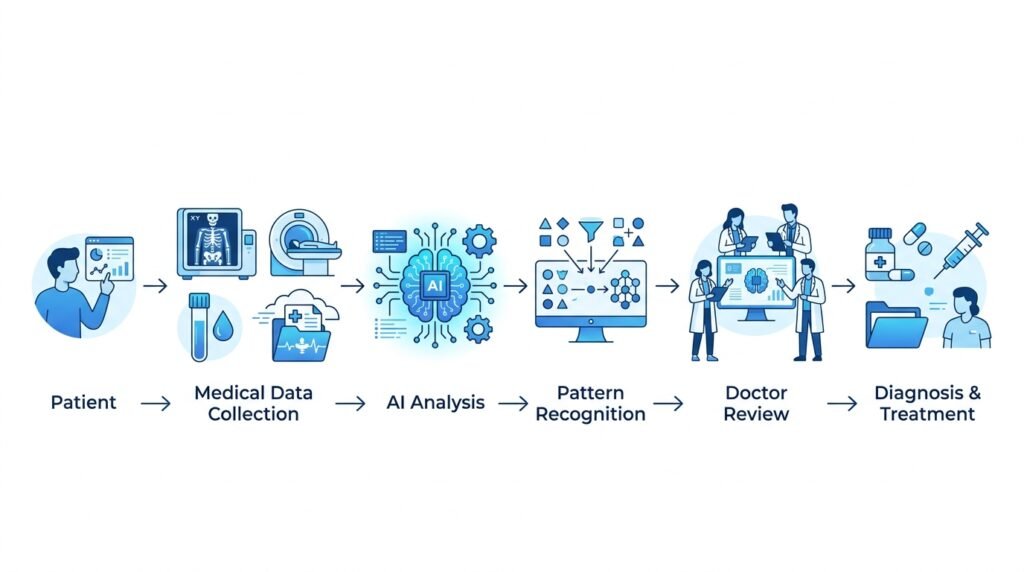
AI Medical Diagnosis Workflow
Here’s a simplified overview of how AI supports the diagnostic process:
| Step | What Happens |
| Patient Examination | A patient visits a healthcare provider with symptoms or for routine screening. |
| Medical Data Collection | Images, lab reports, medical history, and other health records are gathered. |
| AI Analysis | AI analyzes the data and searches for patterns linked to diseases. |
| Clinical Review | Doctors review the AI’s findings alongside their own assessment. |
| Diagnosis & Treatment Plan | The healthcare professional confirms the diagnosis and recommends the appropriate treatment. |
Real-World Example
Imagine a patient arrives at a hospital with persistent chest pain.
The doctor orders several diagnostic tests, including an ECG, blood tests, and a chest CT scan.
An AI system analyzes the CT scan and highlights a small abnormality in one of the coronary arteries that may indicate early heart disease. At the same time, it reviews previous patient records and identifies similar cases where early intervention significantly reduced the risk of heart attacks.
The cardiologist reviews the AI’s findings, compares them with the patient’s symptoms and test results, and confirms the diagnosis before recommending treatment.
In this example, AI didn’t replace the doctor—it helped ensure that a potentially serious condition was detected more quickly and accurately.
Key Point: AI works best as a clinical decision-support system. By combining advanced data analysis with human medical expertise, healthcare providers can make faster, more informed, and more accurate diagnostic decisions.
Real-World Examples of AI in Medical Diagnosis
Artificial intelligence is already being used in hospitals and healthcare organizations worldwide to assist doctors in diagnosing diseases more quickly and accurately. While the specific tools and level of adoption vary by country and healthcare system, AI has shown promising results across several medical specialties.
Let’s look at some of the most common real-world applications.
1. AI in Radiology
Radiology is one of the fastest-growing areas for AI adoption.
Radiologists review thousands of medical images every year, including X-rays, CT scans, and MRI scans. AI can analyze these images within seconds, helping doctors detect abnormalities that might otherwise be overlooked.
AI can assist in identifying:
- Lung cancer
- Pneumonia
- Bone fractures
- Brain hemorrhages
- Breast cancer
- Liver abnormalities
For example, during emergency situations, AI can automatically flag brain scans that show signs of a stroke, allowing doctors to prioritize patients who need immediate treatment.
Why it matters: Faster image analysis can reduce delays in diagnosis and help patients receive treatment sooner.
2. AI in Cancer Detection
Early detection significantly improves the chances of successful cancer treatment.
AI systems are increasingly being used to identify subtle signs of cancer that may be difficult to detect during manual examinations.
Some common applications include:
- Breast cancer screening through mammograms
- Lung cancer detection from CT scans
- Skin cancer identification from photographs
- Prostate cancer analysis
- Colorectal cancer screening
Instead of replacing specialists, AI serves as a second reviewer, helping reduce the chances of missed abnormalities.
3. AI in Cardiology
Heart disease remains one of the leading causes of death worldwide.
AI helps cardiologists by analyzing:
- ECGs (electrocardiograms)
- Heart imaging
- Blood pressure trends
- Wearable device data
- Electronic health records
These systems can identify irregular heart rhythms, estimate cardiovascular risk, and detect early warning signs that may require further evaluation.
Some hospitals also use AI to predict which patients are at higher risk of heart attacks or heart failure based on their medical history.
4. AI in Ophthalmology
Eye diseases often develop gradually, making early diagnosis essential.
AI-powered diagnostic systems can analyze retinal images to detect conditions such as:
- Diabetic retinopathy
- Glaucoma
- Age-related macular degeneration
Because these diseases may not cause noticeable symptoms in their early stages, AI can help identify patients who need further examination before permanent vision loss occurs.
5. AI in Pathology
Pathologists examine tissue samples under a microscope to diagnose diseases such as cancer.
Modern AI systems can analyze digital pathology slides and highlight suspicious cells for closer review.
This allows pathologists to:
- Review slides more efficiently
- Reduce manual workload
- Improve consistency
- Identify subtle abnormalities
AI is particularly useful when examining large numbers of tissue samples that require detailed analysis.
6. AI in Emergency Medicine
In emergency departments, every minute can make a difference.
AI helps healthcare teams quickly identify patients who may require urgent treatment by analyzing medical images, vital signs, and laboratory results.
Examples include:
- Detecting strokes from brain scans
- Identifying internal bleeding
- Predicting sepsis risk
- Monitoring critically ill patients
By prioritizing urgent cases, AI supports faster clinical decision-making during emergencies.
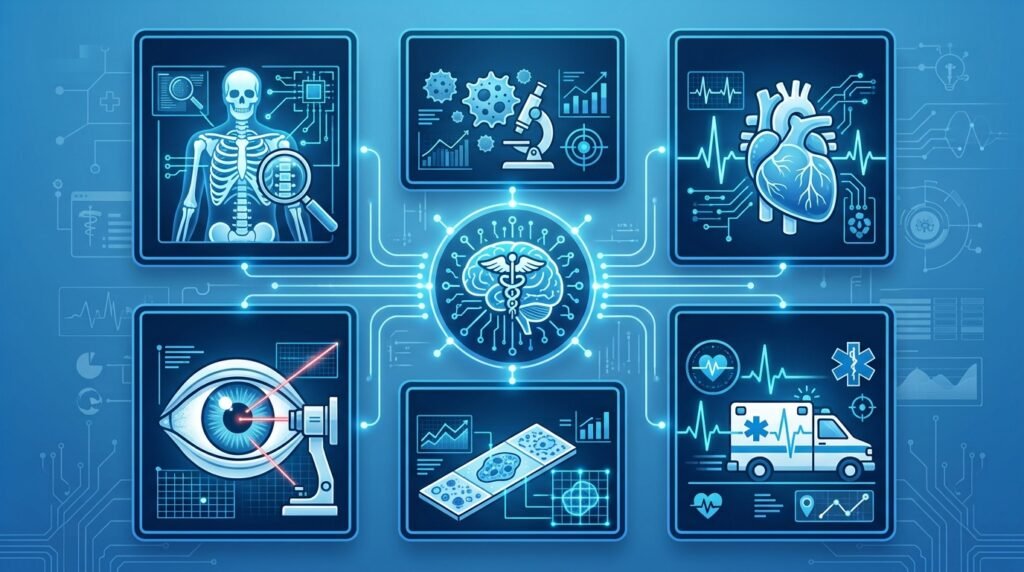
Comparison: Where AI Is Used in Medical Diagnosis
| Medical Specialty | How AI Helps | Example Conditions |
| Radiology | Analyzes medical images | Lung cancer, fractures, pneumonia |
| Oncology | Detects cancer at earlier stages | Breast, lung, prostate cancer |
| Cardiology | Interprets ECGs and predicts heart disease | Arrhythmias, heart attacks |
| Ophthalmology | Examines retinal images | Diabetic retinopathy, glaucoma |
| Pathology | Reviews tissue samples | Cancer diagnosis |
| Emergency Medicine | Prioritizes critical patients | Stroke, sepsis, internal bleeding |
Case Study: AI Assisting in Stroke Detection
Imagine a patient arrives at the emergency department with sudden weakness on one side of the body and difficulty speaking.
A CT scan of the brain is performed immediately.
An AI system analyzes the scan within seconds and detects signs of a possible stroke. It automatically alerts the stroke team and marks the affected area for review.
The neurologist examines the AI’s findings alongside the patient’s symptoms and confirms the diagnosis.
Because the stroke was identified quickly, treatment begins sooner, increasing the likelihood of recovery and reducing the risk of long-term disability.
In this situation, AI did not make the medical decision. Instead, it acted as an intelligent assistant that helped the healthcare team respond more rapidly.
Why These Examples Matter
Across these specialties, AI performs a common role: helping healthcare professionals process complex medical data faster and more consistently. It can highlight patterns, prioritize urgent cases, and support clinical decisions, but it does not replace the expertise, judgment, or patient-centered care provided by doctors.
As AI technologies continue to improve, their role is expected to expand into more areas of medicine, making healthcare more efficient while helping clinicians deliver better outcomes for patients.
Benefits of AI in Medical Diagnosis
Artificial intelligence is transforming healthcare not because it replaces doctors, but because it helps them make faster, more informed, and more consistent clinical decisions. By analyzing vast amounts of medical data in a short time, AI can improve diagnostic accuracy, streamline workflows, and support better patient outcomes.
Here are some of the biggest benefits of AI in medical diagnosis.
1. Earlier Disease Detection
One of AI’s greatest strengths is its ability to detect subtle patterns that may indicate a disease before obvious symptoms appear.
For example, AI can identify tiny abnormalities in medical images that might be difficult to notice during a routine examination. Detecting diseases at an earlier stage often gives patients more treatment options and increases the chances of successful outcomes.
Early detection is particularly valuable for conditions such as:
- Breast cancer
- Lung cancer
- Diabetic retinopathy
- Heart disease
- Stroke
The earlier a disease is identified, the sooner treatment can begin.
2. Improved Diagnostic Accuracy
Even experienced healthcare professionals can occasionally miss subtle abnormalities, especially when reviewing hundreds of medical images or laboratory reports every day.
AI helps reduce this risk by acting as an additional layer of analysis.
Instead of replacing a doctor’s expertise, AI provides another perspective by highlighting suspicious findings that deserve closer attention.
This collaborative approach can improve diagnostic consistency while reducing the likelihood of overlooked conditions.
Example: An AI system reviewing chest X-rays may highlight a small lung nodule that the radiologist can examine more carefully before confirming a diagnosis.
3. Faster Diagnosis
Healthcare professionals often work under significant time pressure, particularly in emergency departments.
AI can analyze large volumes of medical data within seconds, allowing doctors to review findings much sooner than traditional manual processes.
This speed is especially valuable in time-sensitive situations such as:
- Stroke diagnosis
- Heart attacks
- Internal bleeding
- Severe infections
- Trauma care
Earlier diagnosis can lead to earlier treatment, which may improve patient outcomes.
4. Reduced Workload for Healthcare Professionals
Doctors, radiologists, and pathologists review thousands of cases every year.
AI can automate repetitive tasks such as:
- Screening medical images
- Organizing patient records
- Identifying abnormal test results
- Prioritizing urgent cases
By handling routine analysis, AI allows healthcare professionals to spend more time on complex cases, patient communication, and treatment planning.
Rather than replacing jobs, AI often helps clinicians work more efficiently.
5. Better Decision Support
Medical diagnosis often requires combining information from multiple sources.
AI can simultaneously analyze:
- Medical history
- Laboratory reports
- Imaging studies
- Genetic data
- Vital signs
- Previous diagnoses
It then provides insights that support clinical decision-making.
Doctors still evaluate the patient’s overall condition before making a final diagnosis, but AI helps organize and interpret complex information more efficiently.
6. More Consistent Results
Human performance can naturally vary due to fatigue, workload, or time constraints.
AI analyzes data using the same trained algorithms every time, helping provide more consistent evaluations across similar cases.
This consistency can improve quality control, particularly in large hospitals where thousands of diagnostic tests are performed daily.
7. Improved Patient Outcomes
Ultimately, the goal of AI in medical diagnosis is better patient care.
When diseases are detected earlier and diagnoses are made more accurately, patients may benefit from:
- Earlier treatment
- Reduced complications
- Shorter hospital stays
- Better recovery rates
- More personalized care
Although AI cannot guarantee better outcomes in every case, it provides valuable support that can help healthcare teams make more informed decisions.
8. Expanding Access to Healthcare
Many regions around the world face shortages of medical specialists.
AI-powered diagnostic systems can assist healthcare providers in areas where access to experienced radiologists, pathologists, or specialists is limited.
For example, AI can help primary care physicians identify conditions that require referral to specialists, improving access to timely medical care in underserved communities.
While AI cannot replace expert consultation, it can help bridge gaps in healthcare delivery.
Benefits at a Glance
| Benefit | How It Helps Patients |
| Earlier Disease Detection | Increases the chances of successful treatment by identifying conditions sooner. |
| Higher Diagnostic Accuracy | Supports doctors in recognizing subtle abnormalities. |
| Faster Diagnosis | Reduces waiting times and enables quicker treatment. |
| Lower Clinical Workload | Allows healthcare professionals to focus on patient care rather than repetitive tasks. |
| Better Clinical Decisions | Combines information from multiple sources to support diagnosis. |
| More Consistent Analysis | Reduces variation in routine diagnostic evaluations. |
| Improved Patient Outcomes | Supports earlier intervention and more personalized care. |
| Greater Healthcare Access | Assists providers in regions with limited specialist availability. |
Benefits for Different Stakeholders
| Stakeholder | Key Benefits |
| Patients | Earlier diagnosis, faster treatment, improved care |
| Doctors | Decision support, reduced workload, greater efficiency |
| Hospitals | Better workflow, improved resource allocation, enhanced productivity |
| Healthcare Systems | Increased efficiency, scalable diagnostic support, potential cost savings over time |
Important Perspective
Although AI offers significant advantages, it is not a substitute for professional medical judgment. A diagnosis involves more than analyzing data—it also requires understanding a patient’s symptoms, medical history, lifestyle, preferences, and unique clinical circumstances.
The most effective healthcare combines human expertise with AI-powered insights. AI provides speed, consistency, and pattern recognition, while doctors contribute experience, empathy, ethical judgment, and personalized decision-making.
This partnership is what makes AI such a valuable tool in modern medicine.
Continue Learning
Want to explore how AI is transforming other industries?
Challenges and Limitations of AI in Medical Diagnosis
Artificial intelligence has the potential to improve healthcare, but like any technology, it also has limitations. Understanding these challenges is important for developing realistic expectations about what AI can and cannot do in clinical practice.
Healthcare decisions directly affect people’s lives, so AI systems must be accurate, transparent, secure, and used responsibly. For this reason, AI is designed to support healthcare professionals—not replace them.
Let’s explore the biggest challenges facing AI in medical diagnosis.
1. AI Is Not Always 100% Accurate
AI models learn from historical medical data, but no system is perfect.
Sometimes AI may:
- Miss signs of a disease (false negative)
- Incorrectly identify a healthy patient as having a disease (false positive)
- Produce uncertain or conflicting results
Even highly accurate AI systems can make mistakes when presented with unusual cases or poor-quality medical data.
For this reason, AI recommendations should always be reviewed by qualified healthcare professionals before making important medical decisions.
2. Data Quality Determines AI Performance
AI is only as good as the data it learns from.
If the training data contains:
- Missing information
- Incorrect diagnoses
- Poor-quality medical images
- Outdated records
the AI’s predictions may become less reliable.
For example, an AI model trained primarily using data from one population may not perform equally well for patients from different age groups, ethnic backgrounds, or geographic regions.
High-quality, diverse, and regularly updated medical datasets are essential for developing reliable AI systems.
3. Bias in AI Models
AI can unintentionally inherit biases that exist in the data used to train it.
If certain patient groups are underrepresented during training, the system may perform better for some populations than others.
Examples include:
- Different skin tones in dermatology
- Rare diseases with limited training data
- Underrepresented age groups
- Geographic differences in healthcare data
Reducing bias requires continuous testing, validation, and the use of diverse datasets from multiple populations.
4. Patient Privacy and Data Security
Medical records contain highly sensitive personal information.
AI systems often require access to:
- Medical images
- Laboratory results
- Health histories
- Genetic information
- Electronic Health Records (EHRs)
Healthcare organizations must ensure this information is protected through strong cybersecurity measures, secure data storage, encryption, and compliance with privacy regulations.
Maintaining patient trust is just as important as developing accurate AI systems.
5. Limited Explainability
Some advanced AI models, particularly deep learning systems, can produce highly accurate predictions without clearly explaining how they reached those conclusions.
This is sometimes referred to as the “black box” problem.
For healthcare professionals, understanding why an AI system made a recommendation can be just as important as the recommendation itself.
Researchers are actively developing Explainable AI (XAI) techniques that help make AI decisions more transparent and easier for clinicians to interpret.
6. Regulatory and Ethical Challenges
Before AI systems can be used in clinical settings, they often need to meet strict regulatory requirements to demonstrate safety and effectiveness.
Healthcare organizations must consider questions such as:
- Is the AI system accurate enough?
- Has it been properly validated?
- Who is responsible if an AI recommendation is incorrect?
- How should AI recommendations be documented?
These ethical and legal considerations are essential for ensuring patient safety and responsible AI adoption.
7. High Implementation Costs
Developing and deploying AI systems can require significant investment.
Hospitals may need to invest in:
- Advanced computing infrastructure
- Secure data storage
- Software integration
- Staff training
- Ongoing maintenance
- Regulatory compliance
While AI may reduce costs over the long term by improving efficiency, the initial investment can be a barrier for some healthcare providers.
8. AI Cannot Replace Human Judgment
Perhaps the most important limitation is that AI lacks human understanding.
AI cannot fully evaluate:
- A patient’s emotions
- Family circumstances
- Personal values
- Lifestyle factors
- Complex clinical conversations
- Ethical considerations
Medical diagnosis often involves communication, empathy, and professional judgment—qualities that remain uniquely human.
The final responsibility for diagnosing and treating patients always belongs to qualified healthcare professionals.
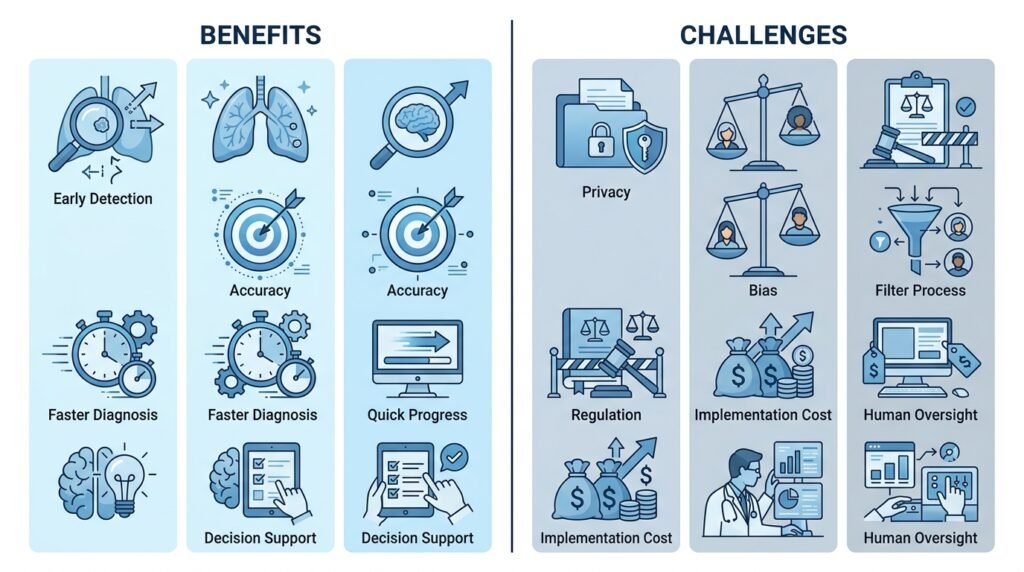
Challenges at a Glance
| Challenge | Why It Matters |
| Accuracy Limitations | AI predictions may occasionally be incorrect or uncertain. |
| Data Quality | Poor or incomplete data can reduce reliability. |
| Algorithmic Bias | AI may perform differently across populations if training data lacks diversity. |
| Privacy & Security | Medical information must be protected from unauthorized access. |
| Limited Explainability | Some AI models do not clearly explain how decisions are made. |
| Regulatory Requirements | AI systems must meet strict safety and effectiveness standards. |
| Implementation Costs | Hospitals may face significant upfront investment. |
| Human Oversight | Doctors remain responsible for diagnosis and treatment decisions. |
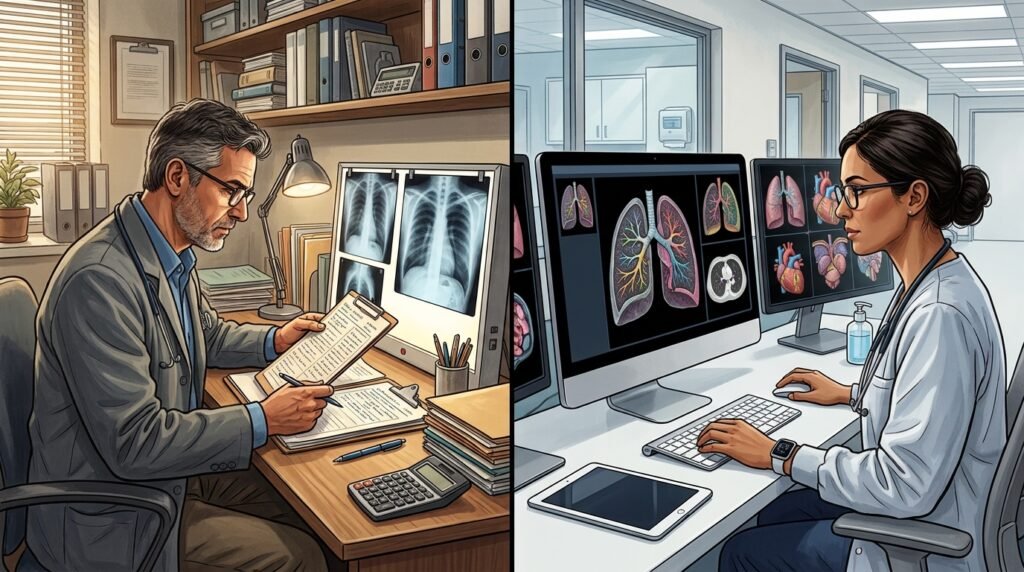
AI vs Human Doctors: Why Collaboration Matters
A common misconception is that AI will eventually replace doctors.
In reality, today’s healthcare systems are moving toward AI-assisted medicine, where technology and medical professionals work together.
| AI Strengths | Human Strengths |
| Processes large amounts of data quickly | Understands patient history and context |
| Detects subtle patterns in images | Applies clinical experience and judgment |
| Works consistently without fatigue | Communicates with empathy and compassion |
| Supports evidence-based decisions | Makes ethical and personalized treatment decisions |
The best outcomes are achieved when AI enhances—not replaces—the expertise of healthcare professionals.
Looking Ahead
As researchers continue to improve AI models, many of today’s challenges are gradually being addressed through:
- Better and more diverse training data
- Explainable AI techniques
- Stronger privacy protections
- International regulatory standards
- Continuous clinical validation
These advancements are helping make AI safer, more reliable, and more useful in real-world healthcare.
Editorial Note: This article is intended for educational purposes only and should not be considered medical advice. AI systems can support healthcare professionals, but they should never be used as a substitute for consultation, diagnosis, or treatment by a qualified medical practitioner.
Continue Your AI Journey
Keep building your AI knowledge with these beginner-friendly guides.
-
AI in Patient Care (2026): 7 Clinical Workflows Transforming Patient Outcomes
Learn more : AI in Patient Care (2026): 7 Clinical Workflows Transforming Patient Outcomes🕒 10-12 min read • Updated: July 2026 Introduction Artificial Intelligence (AI) is transforming healthcare in ways that…
-

AI in Drug Discovery: 7 Ways AI Is Changing Medicine in 2026
Learn more : AI in Drug Discovery: 7 Ways AI Is Changing Medicine in 2026🕒 10-12 min read • Updated: July 2026 introduction Artificial intelligence (AI) is transforming industries worldwide, and healthcare…
-
AI in Medical Diagnosis (2026): 5 Proven Workflows Saving Time & Cutting Diagnostic Errors
Learn more : AI in Medical Diagnosis (2026): 5 Proven Workflows Saving Time & Cutting Diagnostic Errors🕒 12 min read • Updated: July 2026 Introduction Artificial intelligence (AI) is no longer a futuristic concept…
-

AI in Healthcare Explained: A Complete Beginner’s Guide
Learn more : AI in Healthcare Explained: A Complete Beginner’s Guide🕒 10-12 min read • Updated: July 2026 Introduction Every day, hospitals generate enormous amounts of medical data—from…
Related Articles
Explore more guides and resources related to this topic.
-

ChatGPT Complete Guide for Beginners (2026): Master AI Step-by-Step
Learn more : ChatGPT Complete Guide for Beginners (2026): Master AI Step-by-Step🕒 20-25 min read • Updated: Aug 2026 Introduction Introduction Artificial intelligence is changing how people learn, work,…
-

Master Prompt Engineering in 2026: A Step-by-Step Beginner’s Guide
Learn more : Master Prompt Engineering in 2026: A Step-by-Step Beginner’s Guide🕒 18-20 min read • Updated: Aug 2026 Introduction Artificial intelligence (AI) tools like ChatGPT, Claude, Gemini, and…
-
Large Language Models (LLMs) Explained: The Complete 2026 Beginner’s Guide
Learn more : Large Language Models (LLMs) Explained: The Complete 2026 Beginner’s Guide🕒 14-16 min read • Updated: Aug 2026 Introduction Artificial Intelligence has become part of everyday life. Whether…
-

Best AI Image Generators in 2026: 10 Free & Paid Tools Tested
Learn more : Best AI Image Generators in 2026: 10 Free & Paid Tools Tested🕒 15 min read • Updated: July 2026 introduction Creating stunning images no longer requires years of design…
-
10 Best AI Chatbots in 2026: Tested & Ranked for Every Use Case
Learn more : 10 Best AI Chatbots in 2026: Tested & Ranked for Every Use Case🕒 10-12 min read • Updated: July 2026 introduction Artificial intelligence has made chatbots far more capable than…
-

ChatGPT vs Microsoft Copilot (2026): Tested, Pricing & Workflow Comparison
Learn more : ChatGPT vs Microsoft Copilot (2026): Tested, Pricing & Workflow Comparison🕒 10-12 min read • Updated: July 2026 Introduction Choosing between ChatGPT and Microsoft Copilot can be challenging,…
References
- World Health Organization (WHO) – Ethics and governance of artificial intelligence for health
- World Health Organization (WHO) – Artificial Intelligence for Health
- U.S. Food and Drug Administration (FDA) – Artificial Intelligence and Machine Learning in Medical Devices
- National Institutes of Health (NIH) – Artificial Intelligence in Healthcare (PMC collection)
- National Library of Medicine (PubMed) – Artificial Intelligence in Medical Diagnosis
- Nature Medicine
- Artificial Intelligence in Clinical Medicine
- https://www.nature.com/natmed/
- The Lancet Digital Health
- American Medical Association (AMA) – AI in Healthcare
- National Institute of Biomedical Imaging and Bioengineering (NIBIB)
- National Cancer Institute (NCI) – Artificial Intelligence in Cancer Research
Leave a Reply