Tag: Deep Learning

Guides covering deep learning models, neural networks, and related AI technologies.

  • AI vs Machine Learning vs Deep Learning: What’s the Difference? (2026)

    AI vs Machine Learning vs Deep Learning: What’s the Difference? (2026)

    🕒 13 min read • Updated: July 2026

    Introduction

    Artificial Intelligence (AI), Machine Learning (ML), and Deep Learning (DL) are often used interchangeably in conversations, news articles, and marketing materials. While these terms are closely related, they do not mean the same thing. Understanding the differences is essential for anyone beginning their AI journey.

    Artificial Intelligence is the broad field focused on creating systems that can perform tasks requiring human intelligence. Machine Learning is a subset of AI that enables computers to learn from data rather than relying solely on explicit programming. Deep Learning is a specialized branch of Machine Learning that uses neural networks with multiple layers to solve complex problems.

    If these concepts seem confusing at first, you’re not alone. The relationship between them is best understood as a hierarchy: Deep Learning is part of Machine Learning, and Machine Learning is part of Artificial Intelligence.

    In this guide, we’ll explain each concept in simple terms, compare them side by side, explore real-world applications, and help you understand when each approach is used.


    Key Takeaways

    • Artificial Intelligence is the broadest field focused on making machines perform intelligent tasks.
    • Machine Learning is a subset of AI that enables systems to learn patterns from data.
    • Deep Learning is a subset of Machine Learning that uses multi-layered neural networks.
    • Not every AI system uses Machine Learning.
    • Not every Machine Learning model uses Deep Learning.
    • Deep Learning typically requires significantly more data and computing power than traditional Machine Learning.
    • Understanding these differences helps you choose the right tools, learning path, or technology for a given problem.

    What Is Artificial Intelligence?

    Artificial Intelligence is the science and engineering of creating computer systems that can perform tasks that typically require human intelligence. These tasks include understanding language, recognizing images, making decisions, solving problems, and learning from experience.

    Traditional computer programs follow fixed rules written by developers. AI systems, however, can be designed to adapt, reason, or improve their performance depending on the techniques used.

    Examples of AI include:

    • Virtual assistants that understand voice commands.
    • Recommendation systems that suggest movies or products.
    • Spam filters that identify unwanted emails.
    • Navigation apps that recommend optimal routes.
    • Medical systems that assist doctors in analyzing scans.

    AI is the umbrella under which many specialized technologies—including Machine Learning and Deep Learning—operate.


    What Is Machine Learning?

    Machine Learning is a branch of Artificial Intelligence that focuses on enabling computers to learn from data instead of relying entirely on manually programmed rules.

    Rather than telling a computer every possible scenario it might encounter, developers provide data and algorithms that allow the system to identify patterns and make predictions. Over time, the model can improve its performance as it processes more relevant data.

    For example, instead of explicitly programming every characteristic of a spam email, a Machine Learning model can analyze thousands of labeled emails to learn which features are commonly associated with spam. It then applies that knowledge to classify new messages.

    Common applications of Machine Learning include:

    • Email spam detection
    • Product recommendations
    • Credit risk assessment
    • Fraud detection
    • Demand forecasting
    • Customer segmentation
    • Predictive maintenance

    Machine Learning has become a core technology across industries because it enables systems to adapt to changing data without requiring constant manual updates.


    What Is Deep Learning?

    Deep Learning is a specialized area of Machine Learning that uses artificial neural networks with many interconnected layers to process and learn from large amounts of data.

    These neural networks are inspired by the structure and function of the human brain, although they are much simpler. Each layer extracts increasingly complex patterns from the input data, allowing the model to perform sophisticated tasks such as image recognition, language translation, speech synthesis, and content generation.

    Deep Learning excels in scenarios where data is abundant and patterns are too complex to define manually.

    Examples include:

    • Speech recognition
    • Facial recognition
    • Autonomous driving
    • Medical image analysis
    • Language translation
    • Large language models
    • AI image generation
    • Voice cloning

    Many modern Generative AI systems, including large language models, rely on Deep Learning techniques to generate coherent text, images, audio, and code.


    Understanding the Relationship

    A useful way to think about these technologies is as nested circles:

    • Artificial Intelligence is the broadest concept.
    • Machine Learning is one approach within AI.
    • Deep Learning is a specialized form of Machine Learning.

    In other words:

    • All Deep Learning is Machine Learning.
    • All Machine Learning is Artificial Intelligence.
    • But not all Artificial Intelligence uses Machine Learning, and not all Machine Learning uses Deep Learning.

    This hierarchy helps explain why these terms are often mentioned together yet represent different levels of specialization.

    AI vs Machine Learning vs Deep Learning: A Detailed Comparison

    Although Artificial Intelligence, Machine Learning, and Deep Learning are closely related, they differ in their goals, methods, and applications. The easiest way to understand them is to compare them across key characteristics.

    FeatureArtificial Intelligence (AI)Machine Learning (ML)Deep Learning (DL)
    DefinitionThe broad field of creating intelligent systemsA subset of AI that learns patterns from dataA subset of ML that uses multi-layered neural networks
    Primary GoalSimulate intelligent behaviorLearn from data to make predictions or decisionsLearn complex patterns automatically from large datasets
    Human InterventionUsually higherModerateLower after training
    Data RequirementsCan work with little or no training data (rule-based systems)Moderate to large datasetsVery large datasets
    Computing PowerLow to moderateModerateHigh, often using GPUs or specialized hardware
    Feature EngineeringOften manualUsually manual or semi-automatedMostly automatic
    Typical AlgorithmsRule-based systems, search algorithms, expert systemsDecision Trees, Random Forests, Support Vector Machines, Linear RegressionConvolutional Neural Networks (CNNs), Recurrent Neural Networks (RNNs), Transformers
    Common ApplicationsChatbots, recommendation systems, robotics, schedulingFraud detection, forecasting, spam filtering, recommendationsImage recognition, speech recognition, generative AI, autonomous vehicles

    Visualizing the Relationship

    Think of these technologies as three nested circles:

    Artificial Intelligence

       └── Machine Learning

               └── Deep Learning

    Every Deep Learning model is a Machine Learning model, and every Machine Learning model belongs to the broader field of Artificial Intelligence. However, many AI systems—such as rule-based expert systems—do not use Machine Learning at all.


    How They Solve Problems

    Let’s use a simple example: identifying whether an email is spam.

    Artificial Intelligence

    A traditional AI system might rely on predefined rules, such as:

    • If the email contains certain suspicious words, mark it as spam.
    • If it comes from a blocked sender, move it to the spam folder.

    The system follows instructions written by developers and does not improve unless those rules are updated.

    Machine Learning

    Instead of relying on fixed rules, a Machine Learning model analyzes thousands of labeled emails to identify patterns associated with spam. It learns from examples and can adapt as new data becomes available.

    Deep Learning

    A Deep Learning model goes a step further by automatically learning complex relationships within the data. It can recognize subtle patterns in language, context, and structure without requiring extensive manual feature engineering.

    This makes Deep Learning especially effective for handling large volumes of diverse and evolving data.


    Real-World Example: Recognizing a Cat in an Image

    This classic example illustrates the differences well.

    Artificial Intelligence

    A rule-based AI system might attempt to identify a cat by checking for manually defined characteristics:

    • Two ears
    • Four legs
    • Whiskers
    • Tail

    This approach works only if all conditions are met and is not very flexible.

    Machine Learning

    A Machine Learning model is trained on thousands of labeled images of cats and non-cats. Over time, it learns which visual features are most useful for distinguishing them.

    Deep Learning

    A Deep Learning model uses a neural network to learn increasingly complex visual features automatically. Early layers detect edges and shapes, while deeper layers recognize patterns such as eyes, fur textures, and facial structures.

    This approach achieves much higher accuracy, especially with large and diverse datasets.


    Data Requirements

    One of the biggest differences between these approaches is the amount of data they require.

    Artificial Intelligence

    Many traditional AI systems can function without large datasets because they rely on predefined logic and rules.

    Example: A chess program that follows programmed strategies.

    Machine Learning

    Machine Learning requires labeled or structured data to identify patterns and improve predictions.

    Example: A recommendation system trained on customer purchase histories.

    Deep Learning

    Deep Learning typically requires massive datasets because neural networks contain millions or even billions of parameters that must be optimized during training.

    Example: A large language model trained on vast collections of books, websites, and articles.


    Computing Requirements

    The complexity of these technologies also affects the hardware needed.

    TechnologyTypical Hardware
    Artificial IntelligenceStandard CPU
    Machine LearningCPU or GPU, depending on the model
    Deep LearningHigh-performance GPUs, TPUs, or AI accelerators

    Training a modern Deep Learning model can take days or weeks on clusters of specialized hardware, while many Machine Learning models can be trained in minutes or hours on a standard computer.


    Common Algorithms

    Artificial Intelligence

    Examples include:

    • Rule-Based Systems
    • Expert Systems
    • Search Algorithms
    • Knowledge Representation
    • Planning Algorithms

    These techniques rely more on explicit logic than on learning from data.

    Machine Learning

    Popular algorithms include:

    • Linear Regression
    • Logistic Regression
    • Decision Trees
    • Random Forests
    • Support Vector Machines (SVM)
    • K-Means Clustering
    • Gradient Boosting

    These algorithms are widely used for prediction, classification, and pattern recognition tasks.

    Deep Learning

    Common neural network architectures include:

    • Artificial Neural Networks (ANNs)
    • Convolutional Neural Networks (CNNs)
    • Recurrent Neural Networks (RNNs)
    • Long Short-Term Memory Networks (LSTMs)
    • Generative Adversarial Networks (GANs)
    • Transformers

    Transformers, in particular, have become the foundation for many modern Generative AI systems, including large language models.


    Real-World Applications Across Industries

    Understanding where each technology is used helps clarify their differences.

    IndustryArtificial IntelligenceMachine LearningDeep Learning
    HealthcareClinical decision supportDisease risk predictionMedical image analysis
    FinanceAutomated customer serviceFraud detectionMarket trend analysis
    RetailVirtual shopping assistantsProduct recommendationsVisual product search
    ManufacturingProcess automationPredictive maintenanceQuality inspection using computer vision
    TransportationRoute optimizationTraffic forecastingAutonomous driving systems
    EducationIntelligent tutoring systemsPersonalized learning recommendationsAI-powered language and speech tools

    While all three contribute to innovation, Deep Learning is typically chosen for problems involving complex, unstructured data such as images, audio, and natural language.


    When Should You Use Each?

    The choice depends on the problem you’re trying to solve.

    • Artificial Intelligence is suitable when clear rules or logic can define the task.
    • Machine Learning is effective when you have sufficient data and want the system to learn patterns and make predictions.
    • Deep Learning is ideal for highly complex tasks involving large amounts of unstructured data, such as image recognition, speech processing, or advanced language understanding.

    Selecting the right approach requires balancing accuracy, data availability, computing resources, and the complexity of the problem.

    Advantages and Limitations of AI, Machine Learning, and Deep Learning

    Each technology offers unique strengths and comes with its own challenges. Understanding these trade-offs helps organizations and individuals choose the right solution for a particular problem.

    Advantages of Artificial Intelligence

    Artificial Intelligence aims to automate tasks that typically require human intelligence. Its broad scope allows it to be applied across many industries.

    Benefits

    • Automates repetitive and time-consuming tasks.
    • Improves efficiency and productivity.
    • Supports faster, data-driven decision-making.
    • Operates continuously without fatigue.
    • Enhances customer experiences through personalization and automation.
    • Powers intelligent systems such as virtual assistants and recommendation engines.

    Limitations

    • Some AI systems struggle with situations they were not designed to handle.
    • Rule-based AI lacks the ability to learn unless explicitly updated.
    • Building and maintaining AI systems can require significant expertise.
    • Ethical concerns such as bias, transparency, and accountability remain important challenges.

    Advantages of Machine Learning

    Machine Learning enables systems to improve their performance by learning from data rather than relying solely on predefined rules.

    Benefits

    • Learns patterns from historical data.
    • Improves predictions as more relevant data becomes available.
    • Adapts better to changing conditions than traditional rule-based systems.
    • Handles large datasets more efficiently than manual analysis.
    • Supports a wide range of predictive and analytical applications.

    Limitations

    • Requires high-quality training data.
    • Performance can decline if the data is biased, incomplete, or outdated.
    • Selecting the right algorithm often requires domain expertise.
    • Many models become difficult to interpret as complexity increases.

    Advantages of Deep Learning

    Deep Learning has transformed fields such as computer vision, natural language processing, and speech recognition by enabling computers to learn highly complex patterns automatically.

    Benefits

    • Achieves state-of-the-art performance on many complex tasks.
    • Learns useful features directly from raw data with minimal manual feature engineering.
    • Excels at processing images, audio, video, and natural language.
    • Powers many modern Generative AI systems.
    • Continues to improve as larger datasets and more computing resources become available.

    Limitations

    • Requires massive datasets for effective training.
    • Demands significant computing power, often involving GPUs or specialized hardware.
    • Training can be time-consuming and expensive.
    • Models often function as “black boxes,” making their decisions difficult to interpret.
    • Small improvements in performance may require disproportionately large investments in data and infrastructure.

    Common Misconceptions

    As AI becomes more popular, several misconceptions continue to circulate. Clearing them up helps readers build a more accurate understanding of the field.

    Misconception 1: AI, Machine Learning, and Deep Learning Are the Same

    They are related but distinct concepts.

    Artificial Intelligence is the broad discipline. Machine Learning is one method of achieving AI, and Deep Learning is a specialized approach within Machine Learning.


    Misconception 2: Every AI System Learns on Its Own

    Not all AI systems learn from experience.

    Many traditional AI systems follow predefined rules and do not improve automatically. Learning from data is a characteristic of Machine Learning and Deep Learning, not AI as a whole.


    Misconception 3: Deep Learning Is Always Better Than Machine Learning

    Deep Learning is powerful, but it is not always the best choice.

    For smaller datasets or simpler prediction tasks, traditional Machine Learning models can deliver excellent results with lower computational costs and greater interpretability.


    Misconception 4: AI Thinks Like Humans

    Current AI systems do not possess human consciousness, emotions, or genuine understanding.

    They recognize statistical patterns in data and generate outputs based on those patterns. While they can appear intelligent, they do not “think” or “reason” in the same way people do.


    Misconception 5: AI Will Replace Every Job

    AI is more likely to transform jobs than eliminate all of them.

    Many routine tasks can be automated, but human skills such as creativity, strategic thinking, leadership, empathy, and ethical decision-making remain essential. In many professions, AI serves as a tool that enhances human productivity rather than replacing people entirely.


    Choosing the Right Approach

    The appropriate technology depends on the nature of the problem, the available data, and the desired outcome.

    ScenarioRecommended ApproachWhy
    Rule-based decision-makingArtificial IntelligenceClear logic can be explicitly programmed.
    Predicting customer churnMachine LearningHistorical data can be used to identify patterns and make predictions.
    Detecting objects in imagesDeep LearningNeural networks excel at visual recognition tasks.
    Speech-to-text systemsDeep LearningEffective at modeling complex audio patterns.
    Fraud detectionMachine LearningLearns evolving patterns in financial transactions.
    Content generationDeep LearningLarge language models and diffusion models can generate text, images, and audio.

    There is no universal “best” technology. The most effective solution is the one that aligns with the problem, available resources, and business goals.


    Future Trends

    Artificial Intelligence continues to evolve rapidly, with several trends shaping its future.

    Multimodal AI

    Modern AI systems can increasingly understand and generate multiple forms of information, including text, images, audio, and video within a single model.

    Smaller and More Efficient Models

    Researchers are developing models that require fewer computing resources while maintaining strong performance, making AI more accessible across devices.

    Explainable AI (XAI)

    As AI is used in sensitive areas such as healthcare and finance, improving transparency and interpretability has become a major focus.

    AI Regulation and Responsible Development

    Governments and organizations are introducing frameworks to encourage the safe, ethical, and responsible use of AI. Topics such as privacy, fairness, accountability, and transparency are becoming central to AI adoption.

    Human-AI Collaboration

    Rather than replacing people, many AI systems are being designed to work alongside humans—assisting with creativity, research, coding, customer support, and decision-making.


    Beginner Learning Roadmap

    If you’re just starting your AI journey, learning these topics in a logical order will make the concepts much easier to understand.

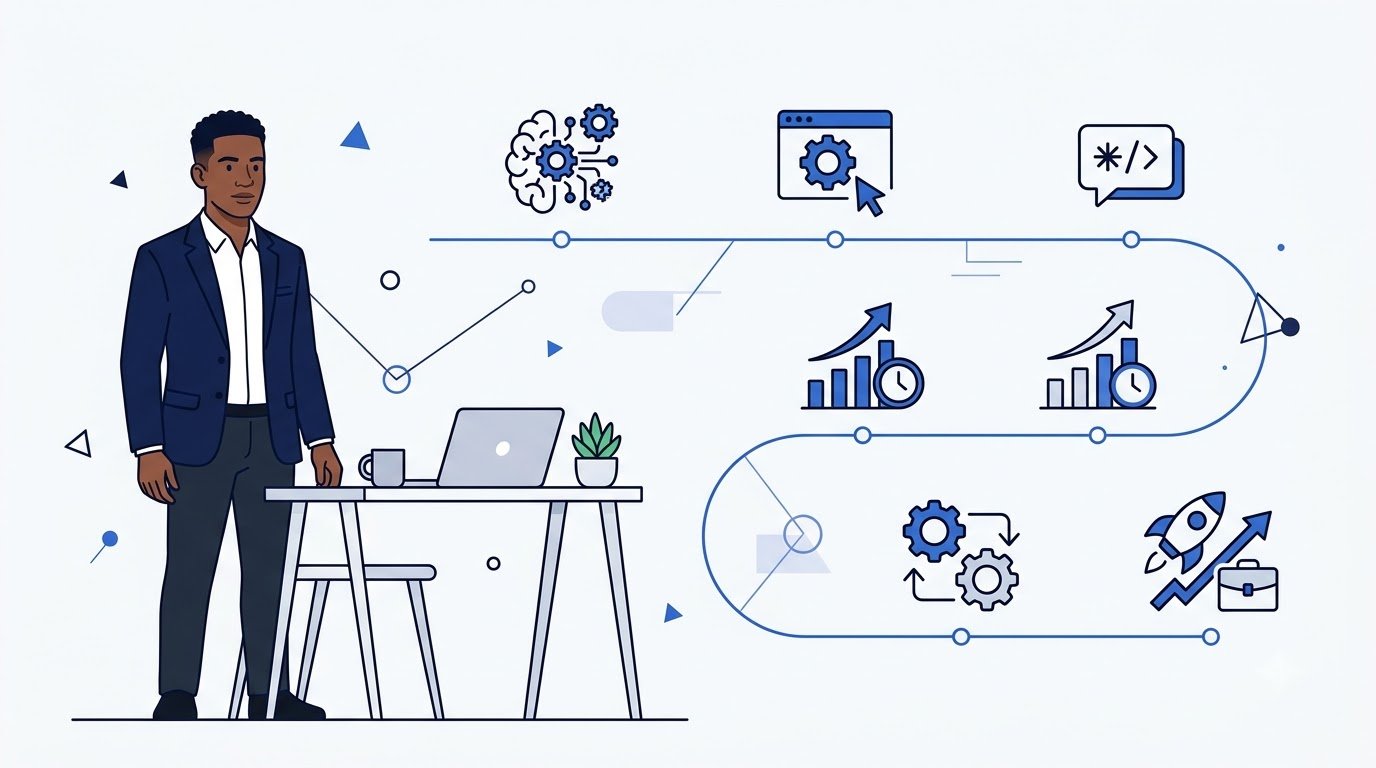
    1. Learn the fundamentals of Artificial Intelligence to understand what AI is and where it’s used.
    2. Study Machine Learning to see how computers learn from data and make predictions.
    3. Explore Deep Learning to understand neural networks and how they solve complex problems.
    4. Understand Generative AI, including how modern AI systems create text, images, and audio.
    5. Experiment with AI tools such as chatbots, image generators, and coding assistants to gain practical experience.
    6. Learn basic Python and data analysis if you’re interested in building AI applications.
    7. Continue exploring advanced topics such as Natural Language Processing, Computer Vision, Reinforcement Learning, and AI ethics.

    By building your knowledge step by step, you’ll develop a strong foundation for understanding both today’s AI technologies and future innovations.

    Frequently Asked Questions (FAQ)

    What is the difference between AI, Machine Learning, and Deep Learning?

    Artificial Intelligence (AI) is the broad field of creating systems that can perform tasks requiring human intelligence. Machine Learning (ML) is a subset of AI that enables computers to learn patterns from data. Deep Learning (DL) is a specialized branch of Machine Learning that uses multi-layered neural networks to solve complex problems such as image recognition, speech processing, and natural language understanding.


    Is Deep Learning part of Artificial Intelligence?

    Yes. Deep Learning is a subset of Machine Learning, which itself is a subset of Artificial Intelligence. This means every Deep Learning model is an AI system, but not every AI system uses Deep Learning.


    Can Machine Learning exist without Deep Learning?

    Yes. Many Machine Learning algorithms, such as Decision Trees, Random Forests, and Support Vector Machines, do not rely on Deep Learning. These algorithms are often effective for structured data and require less computational power.


    Which is better: Machine Learning or Deep Learning?

    Neither is universally better. Machine Learning is often more suitable for smaller datasets, structured data, and problems where interpretability is important. Deep Learning excels with large datasets and complex tasks involving images, audio, video, or natural language.


    Does Artificial Intelligence always learn from data?

    No. Some AI systems are rule-based and follow predefined instructions without learning from experience. Learning from data is a defining characteristic of Machine Learning and Deep Learning, not Artificial Intelligence as a whole.


    Why is Deep Learning so popular today?

    Deep Learning has become more practical due to advances in computing power, access to large datasets, and improved neural network architectures. These developments have enabled major breakthroughs in computer vision, speech recognition, language translation, and Generative AI.


    Do I need to learn Machine Learning before Deep Learning?

    Yes. Understanding the fundamentals of Machine Learning—such as data, features, training, and evaluation—provides a strong foundation for learning Deep Learning concepts and neural networks.


    Where is AI used in everyday life?

    AI is part of many daily experiences, including:

    • Search engines
    • Voice assistants
    • Recommendation systems
    • Spam filters
    • Navigation apps
    • Online shopping
    • Fraud detection
    • Customer support chatbots
    • Translation tools
    • Smart home devices

    Conclusion

    Artificial Intelligence, Machine Learning, and Deep Learning are closely connected, but they serve different roles within the broader field of intelligent computing.

    Artificial Intelligence provides the overarching goal of building systems that can perform tasks requiring human-like intelligence. Machine Learning enables these systems to improve by learning from data, while Deep Learning extends this capability through advanced neural networks that excel at handling complex, unstructured information.

    As AI continues to transform industries and everyday life, understanding these distinctions will help you make sense of emerging technologies, evaluate new tools, and build a stronger foundation for further learning.

    Whether you’re a student, professional, entrepreneur, or simply curious about AI, mastering these core concepts is an important first step toward confidently exploring the rapidly evolving world of artificial intelligence.


    Continue Your AI Learning Journey

    If you’re new to AI, these topics provide a natural next step:

    1. What Is Artificial Intelligence? A Beginner-Friendly Guide (2026)
    2. What Is Generative AI? A Beginner’s Guide (2026)
    3. How Does ChatGPT Work? (upcoming)
    4. Best AI Tools for Beginners (upcoming)

  • What Is Generative AI? A Beginner’s Guide (2026)

    Published: July 4, 2026
    Last Updated: July 4, 2026
    Reading Time: 12 min read
    Difficulty: Beginner

    What Is Generative AI?

    What is Generative AI – Imagine asking a computer to write an email, design a logo, create a realistic image, compose music, or even generate computer code—all within seconds. Just a few years ago, these tasks required significant human effort and specialized skills. Today, Generative AI has made them accessible to millions of people through simple, natural language prompts.

    Generative AI is one of the most transformative branches of artificial intelligence. Unlike traditional AI systems that primarily analyze data or make predictions, Generative AI creates new content. It can produce text, images, videos, audio, software code, and other forms of digital content that resemble human-created work.

    From students and professionals to entrepreneurs and researchers, people across the world are using Generative AI to improve productivity, spark creativity, automate repetitive tasks, and explore new ideas. Businesses are integrating it into customer support, marketing, product development, and software engineering, while educators and creators are discovering innovative ways to teach, learn, and communicate.

    Despite its growing popularity, Generative AI is often misunderstood. Many people wonder:

    • Is Generative AI the same as artificial intelligence?
    • How does it create original content?
    • Does it truly “think” like a human?
    • Can it replace human creativity?
    • What are its limitations and risks?

    This guide answers those questions in clear, beginner-friendly language. Whether you’re completely new to AI or looking to build a stronger foundation, you’ll learn what Generative AI is, how it works, where it’s used, and why it has become one of the most influential technologies of the decade.

    By the end of this article, you’ll have a solid understanding of Generative AI and be ready to explore more advanced topics, including large language models, prompt engineering, and practical AI tools.


    Key Takeaways

    If you’re short on time, here’s what you need to know:

    • Generative AI is a type of artificial intelligence that creates new content, including text, images, audio, video, and computer code.
    • It learns patterns from large datasets rather than copying existing content word for word.
    • Popular applications include AI chatbots, image generators, coding assistants, and music creation tools.
    • Generative AI can improve productivity, creativity, and automation across many industries.
    • While powerful, it can sometimes produce inaccurate, biased, or misleading information, making human review essential.
    • Learning how to use Generative AI responsibly is becoming an increasingly valuable skill for students, professionals, businesses, and creators.

    What Is Generative AI?

    Generative AI is a branch of artificial intelligence that is designed to create new content based on patterns it has learned from large amounts of training data. Instead of simply recognizing or classifying information, it generates original outputs in response to user instructions, often called prompts.

    For example, you can ask a Generative AI system to:

    • Write a blog post.
    • Summarize a research paper.
    • Generate a business proposal.
    • Create a realistic illustration.
    • Design a logo.
    • Write Python code.
    • Draft an email.
    • Translate languages.
    • Produce marketing copy.
    • Brainstorm creative ideas.

    The quality of the output depends on several factors, including the AI model, the clarity of the prompt, and the complexity of the task. Modern systems can often produce results that are coherent, creative, and highly useful, although they still require human judgment to verify accuracy and suitability.

    One of the defining characteristics of Generative AI is its flexibility. Rather than being built for a single task, many modern generative models can perform a wide variety of tasks using the same underlying technology. This versatility has made Generative AI accessible to users across different industries and skill levels.

    How Is Generative AI Different from Traditional AI?

    Traditional AI is primarily designed to analyze existing information and make decisions based on predefined objectives. For example, it may classify emails as spam, recommend products based on past purchases, detect fraudulent transactions, or predict equipment failures using historical data.

    Generative AI, on the other hand, focuses on creating something new. Instead of only identifying patterns, it uses those patterns to generate original content that aligns with the user’s request.

    The distinction can be summarized as follows:

    Traditional AIGenerative AI
    Analyzes existing dataCreates new content
    Classifies informationGenerates information
    Predicts outcomesProduces text, images, audio, video, and code
    Optimizes decisionsAssists with creativity and content generation
    Often task-specificFrequently capable of multiple tasks

    Both forms of AI are valuable and often work together in modern applications. Understanding the difference is an important step toward building a strong foundation in artificial intelligence.


    Why Generative AI Matters in 2026

    Generative AI is no longer limited to research labs or technology companies. It has become a practical tool used by individuals, businesses, educators, healthcare professionals, developers, designers, and organizations of all sizes.

    Its growing importance stems from its ability to help people work more efficiently without replacing the need for human expertise. By automating repetitive tasks and assisting with creative work, Generative AI allows users to focus on higher-level thinking, decision-making, and problem-solving.

    Some of the ways people are using Generative AI today include:

    • Drafting emails and reports.
    • Creating marketing campaigns.
    • Building software prototypes.
    • Generating educational materials.
    • Producing visual content.
    • Assisting with customer support.
    • Accelerating research and data analysis.
    • Translating content for global audiences.

    As AI becomes more integrated into everyday workflows, understanding how Generative AI works is becoming an essential digital skill. Even if you don’t work in technology, knowing how to use AI responsibly can improve productivity, enhance creativity, and help you adapt to an increasingly AI-powered world.

    How Does Generative AI Work?

    At first glance, Generative AI can seem almost magical. You type a question or describe what you want, and within seconds it produces a detailed answer, an image, a piece of music, or even computer code.

    Behind this seemingly effortless process is a sophisticated combination of machine learning, neural networks, massive datasets, and advanced computing. While the underlying technology is complex, the core idea is surprisingly straightforward.

    Think of Generative AI as an incredibly well-read assistant. Instead of memorizing facts like a traditional database, it learns patterns, relationships, and structures from enormous amounts of information. When you give it a prompt, it uses those learned patterns to generate a new response that fits your request.

    Let’s break this process into simple steps.


    Step 1: Learning from Large Amounts of Data

    Before a Generative AI model can answer questions or create content, it must first learn from vast collections of data. This process is known as training.

    Depending on the type of model, the training data may include:

    • Books
    • Articles
    • Websites
    • Research papers
    • Publicly available code
    • Images
    • Audio recordings
    • Videos
    • Conversations
    • Technical documentation

    The AI doesn’t store these sources like a search engine. Instead, it analyzes billions—or even trillions—of examples to identify patterns, relationships, grammar, context, and structures.

    For example, after reading millions of sentences, a language model learns:

    • How words relate to one another.
    • How grammar works.
    • How ideas are organized.
    • How different writing styles vary.
    • How questions are typically answered.

    This learning process allows the model to generate entirely new content rather than simply copying existing material.


    Step 2: Recognizing Patterns Instead of Memorizing

    One of the biggest misconceptions about Generative AI is that it “knows” everything or stores exact copies of what it has seen.

    In reality, it works by recognizing statistical patterns.

    Imagine you read thousands of recipes for chocolate cake. Over time, you would notice common ingredients, typical baking temperatures, and the order of preparation. If someone asked you to create a new chocolate cake recipe, you could write one based on those patterns rather than copying a single recipe word for word.

    Generative AI works in a similar way. It learns the underlying structure of the data and uses that understanding to create new outputs that resemble the examples it has learned from.

    This is why it can produce content that appears original while still reflecting the knowledge and patterns present in its training data.


    Step 3: Understanding Your Prompt

    Everything begins with a prompt—the instruction or question you provide to the AI.

    For example:

    • “Explain quantum computing to a beginner.”
    • “Write a professional email requesting a meeting.”
    • “Generate a logo concept for a coffee shop.”
    • “Create Python code to sort a list.”

    The AI analyzes your prompt to determine:

    • What you’re asking for.
    • The desired format.
    • The level of detail.
    • The tone of the response.
    • Any specific constraints or instructions.

    Clearer prompts generally lead to better results. This is why prompt engineering—the practice of crafting effective AI instructions—has become an increasingly valuable skill.

    Example

    A vague prompt:

    Tell me about marketing.

    A more specific prompt:

    Explain digital marketing to a small business owner in simple language and include five practical tips.

    The second prompt gives the AI much more context, making it easier to generate a relevant and useful response.


    Step 4: Predicting the Next Piece of Information

    Once the AI understands your prompt, it begins generating content one small piece at a time.

    For text-based AI systems, these pieces are called tokens. A token may represent a word, part of a word, or punctuation, depending on the language and model.

    Rather than writing an entire paragraph at once, the model predicts the most appropriate next token based on everything that has come before.

    This process repeats rapidly until the complete response is generated.

    Although this sounds simple, the model performs an enormous number of calculations every second, considering many possible continuations before selecting the next token.

    The result is a response that feels natural and coherent to human readers.


    Step 5: Refining the Output

    Modern Generative AI systems don’t rely solely on their initial training. Many are further refined through additional techniques that improve their usefulness, safety, and ability to follow instructions.

    These improvements help AI:

    • Better understand user intent.
    • Produce more helpful responses.
    • Reduce harmful or inappropriate outputs.
    • Follow formatting instructions.
    • Maintain coherent conversations.
    • Adapt to different writing styles and tasks.

    While these refinements significantly improve performance, they don’t eliminate mistakes. Generative AI can still produce incorrect information, misunderstand prompts, or present inaccurate content confidently.

    For this reason, it’s always important to review AI-generated work before using it in academic, professional, or business settings.


    What Are Neural Networks?

    At the heart of most modern Generative AI systems are neural networks.

    Despite the name, neural networks don’t function like the human brain. Instead, they’re mathematical models inspired by the way biological neurons connect and exchange information.

    A neural network processes information through multiple interconnected layers. As data moves through these layers, the model gradually learns increasingly complex patterns.

    For example, an image-generation model might learn to recognize:

    1. Simple lines and edges.
    2. Basic shapes.
    3. Objects such as eyes or wheels.
    4. Entire faces, animals, or landscapes.

    Similarly, a language model learns relationships between letters, words, sentences, paragraphs, and complete ideas.

    As these models grow larger and are trained on more diverse data, they become capable of performing increasingly sophisticated tasks.


    What Are Foundation Models?

    Many of today’s most capable Generative AI systems are built on foundation models.

    A foundation model is a large AI model trained on a broad range of data so it can perform many different tasks without being designed specifically for each one.

    Instead of creating separate AI systems for writing, translation, summarization, coding, and question answering, a single foundation model can often handle all of these tasks with the right prompt.

    This versatility is one of the main reasons Generative AI has advanced so quickly in recent years.

    Foundation models can also be adapted or fine-tuned for specialized purposes, such as:

    • Healthcare
    • Finance
    • Legal research
    • Scientific discovery
    • Customer support
    • Education
    • Software development

    Types of Generative AI Models

    Generative AI is not a single technology. Different models are designed to create different kinds of content.

    The table below summarizes the most common categories.

    Model TypePrimary PurposeTypical Outputs
    Large Language Models (LLMs)Generate and understand textArticles, emails, code, summaries, conversations
    Image Generation ModelsCreate visual contentIllustrations, artwork, logos, realistic images
    Audio Generation ModelsProduce speech and soundVoiceovers, music, sound effects
    Video Generation ModelsGenerate or edit videoAnimations, short clips, visual storytelling
    Code Generation ModelsAssist with programmingSource code, debugging, documentation
    Multimodal ModelsWork across multiple data typesText, images, audio, and video together

    Each type of model has unique strengths, but they all share the same fundamental principle: learning patterns from data to generate new content in response to user prompts.


    Why This Matters

    Understanding how Generative AI works helps you use it more effectively. Rather than viewing it as a mysterious black box, you can recognize both its capabilities and its limitations.

    It also highlights an important point: Generative AI doesn’t “think” or “understand” in the way humans do. It identifies patterns, predicts likely outputs, and generates responses based on what it has learned during training. This is why it can produce impressive results while still making factual mistakes or requiring human oversight.

    Popular Examples of Generative AI

    Generative AI has become part of everyday life for millions of people. Whether you’re drafting an email, creating an image, writing code, or summarizing a document, there’s likely an AI tool designed to help.

    While new AI applications appear regularly, most fall into a few broad categories based on the type of content they generate.

    AI Chatbots and Writing Assistants

    One of the most familiar forms of Generative AI is the AI chatbot. These tools allow users to ask questions, brainstorm ideas, write content, summarize information, translate languages, and solve problems using natural conversation.

    Common uses include:

    • Writing blog posts and articles
    • Drafting emails and reports
    • Brainstorming business ideas
    • Creating study notes
    • Explaining complex concepts
    • Translating text between languages
    • Summarizing long documents
    • Assisting with research

    These tools have become valuable productivity assistants for students, professionals, educators, and businesses alike.


    AI Image Generators

    Image generation models create original visuals from written descriptions.

    For example, you might describe:

    “A futuristic city at sunset with flying vehicles and lush rooftop gardens.”

    Within seconds, an AI image generator can produce multiple interpretations of that description.

    People use these tools for:

    • Digital artwork
    • Marketing graphics
    • Product mockups
    • Book covers
    • Social media content
    • Concept art
    • Game design
    • Interior design ideas

    Rather than replacing designers, these tools often speed up brainstorming and early-stage creative work.


    AI Coding Assistants

    Software developers increasingly use Generative AI to accelerate programming tasks.

    Modern coding assistants can help:

    • Generate code snippets
    • Explain existing code
    • Find programming errors
    • Suggest improvements
    • Convert code between languages
    • Create documentation
    • Build simple applications

    This allows developers to spend more time solving complex problems while automating repetitive coding tasks.

    It’s important to remember that AI-generated code should always be reviewed and tested before being used in production.


    AI Audio and Music Generation

    Generative AI can also create speech, music, and sound effects.

    Applications include:

    • Voiceovers
    • Podcast narration
    • Audiobooks
    • Background music
    • Language learning
    • Accessibility tools
    • Virtual assistants

    These systems can produce realistic audio while significantly reducing production time for many creative projects.


    AI Video Generation

    Video generation is one of the fastest-growing areas of Generative AI.

    Users can create:

    • Marketing videos
    • Educational lessons
    • Product demonstrations
    • Animated explainers
    • Social media clips
    • Presentations

    Although video generation is still evolving, it has already begun changing how businesses and creators produce visual content.


    Multimodal AI Systems

    Many modern AI systems are multimodal, meaning they can understand and generate more than one type of information.

    For example, a multimodal AI may be able to:

    • Analyze an uploaded image.
    • Answer questions about a chart.
    • Describe a photograph.
    • Generate an image from text.
    • Create captions for videos.
    • Understand both text and images within the same conversation.

    This ability to work across different forms of media makes Generative AI significantly more versatile than earlier AI systems.


    Real-World Applications of Generative AI

    Generative AI is no longer limited to technology companies. Organizations across nearly every industry are finding practical ways to use it to improve productivity, reduce repetitive work, and support human decision-making.

    Let’s explore some of the most common applications.


    Education

    Students and educators use Generative AI to make learning more interactive and personalized.

    Examples include:

    • Explaining difficult concepts in simple language
    • Creating lesson plans
    • Generating quizzes
    • Summarizing textbooks
    • Practicing foreign languages
    • Producing study guides
    • Brainstorming project ideas

    When used responsibly, AI can complement traditional learning by providing additional explanations and practice opportunities.


    Healthcare

    Healthcare professionals are exploring Generative AI to support—not replace—medical expertise.

    Potential applications include:

    • Drafting clinical documentation
    • Summarizing medical literature
    • Assisting with administrative tasks
    • Supporting medical research
    • Improving patient communication

    Because healthcare decisions have significant consequences, AI-generated information must always be reviewed by qualified professionals.


    Software Development

    Developers use Generative AI throughout the software development lifecycle.

    Common applications include:

    • Writing code
    • Debugging programs
    • Creating documentation
    • Explaining unfamiliar codebases
    • Generating test cases
    • Automating repetitive programming tasks

    By reducing routine work, developers can focus more on architecture, design, and solving complex technical challenges.


    Marketing and Content Creation

    Marketing teams use Generative AI to accelerate content production while maintaining human oversight.

    Examples include:

    • Blog outlines
    • Social media captions
    • Email campaigns
    • Product descriptions
    • Advertising copy
    • SEO brainstorming
    • Content localization

    AI helps reduce the time required for first drafts, allowing marketers to spend more time refining messaging and strategy.


    Customer Support

    Businesses increasingly use AI-powered assistants to improve customer service.

    Generative AI can help:

    • Answer common questions
    • Guide users through troubleshooting steps
    • Draft support responses
    • Translate conversations
    • Provide 24/7 assistance

    For more complex or sensitive issues, human representatives remain essential.


    Business Operations

    Organizations use Generative AI to improve efficiency across departments.

    Applications include:

    • Meeting summaries
    • Document drafting
    • Data analysis
    • Report generation
    • Knowledge management
    • Workflow automation
    • Internal communication

    These tools can reduce repetitive administrative work and help employees focus on higher-value tasks.


    Creative Industries

    Artists, designers, musicians, filmmakers, and writers are experimenting with AI as a creative partner.

    Generative AI can assist with:

    • Brainstorming concepts
    • Storyboarding
    • Character design
    • Music composition
    • Script drafting
    • Visual prototyping
    • Idea generation

    Rather than replacing creativity, AI often expands the number of ideas creators can explore during the early stages of a project.


    Why Generative AI Matters in 2026

    Generative AI is becoming as fundamental to knowledge work as spreadsheets, search engines, and cloud computing.

    Its significance extends beyond creating content. It is changing how people learn, communicate, collaborate, and solve problems.

    Several factors are driving its rapid adoption:

    Increased Productivity

    AI can automate repetitive tasks, allowing individuals to dedicate more time to strategic thinking, creativity, and decision-making.

    Greater Accessibility

    People without specialized technical skills can now create presentations, write code, design graphics, or analyze information using simple natural language instructions.

    Faster Innovation

    Businesses can prototype ideas, test concepts, and develop products more quickly by incorporating AI into their workflows.

    Personalized Experiences

    Generative AI can adapt responses, recommendations, and educational content to individual users, making digital experiences more engaging and relevant.

    New Career Opportunities

    As AI adoption grows, demand is increasing for skills such as:

    • Prompt engineering
    • AI literacy
    • Workflow automation
    • AI-assisted content creation
    • AI governance
    • Responsible AI implementation

    Learning how to work effectively with AI is becoming an increasingly valuable professional skill across industries.


    Beginner Tips for Using Generative AI

    If you’re just starting your AI journey, these practices will help you get better results:

    Be Specific With Your Prompts

    Clear instructions produce more useful responses than vague requests.

    Verify Important Information

    AI can make mistakes or present outdated information confidently. Always fact-check content used for academic, legal, financial, or medical purposes.

    Treat AI as a Collaborative Tool

    Think of AI as an assistant that helps generate ideas and accelerate tasks—not as a replacement for your own judgment, expertise, or creativity.

    Experiment Frequently

    The best way to learn is by trying different prompts, refining your requests, and observing how the AI responds.

    Protect Sensitive Information

    Avoid sharing confidential, personal, or proprietary data with AI systems unless you understand the platform’s privacy practices and your organization’s policies.

    Benefits of Generative AI

    Generative AI has rapidly gained popularity because it helps people accomplish tasks more efficiently while opening new possibilities for creativity, learning, and innovation. Whether you’re a student, professional, entrepreneur, or hobbyist, Generative AI can serve as a valuable assistant when used responsibly.

    Here are some of its key benefits.

    1. Improves Productivity

    One of the biggest advantages of Generative AI is its ability to automate repetitive and time-consuming tasks.

    For example, it can help you:

    • Draft emails and reports.
    • Summarize lengthy documents.
    • Organize meeting notes.
    • Generate presentations.
    • Create outlines for articles.
    • Write boilerplate code.
    • Brainstorm ideas for projects.

    By handling routine work, AI allows people to focus on strategic thinking, creativity, and decision-making.


    2. Encourages Creativity

    Generative AI is often described as a creative partner rather than a replacement for human creativity.

    It can help users:

    • Generate fresh ideas.
    • Explore multiple design concepts.
    • Experiment with different writing styles.
    • Create visual prototypes.
    • Compose music.
    • Develop story ideas.
    • Refine marketing campaigns.

    Instead of starting from a blank page, creators can begin with AI-generated drafts and improve them using their own expertise and perspective.


    3. Makes Knowledge More Accessible

    Generative AI can explain complex topics in simple language, making information more accessible to a wider audience.

    For example, it can:

    • Simplify technical concepts.
    • Translate between languages.
    • Summarize research papers.
    • Create study guides.
    • Answer follow-up questions.
    • Adjust explanations for different skill levels.

    This adaptability makes it a valuable learning companion for students and lifelong learners.


    4. Supports Faster Decision-Making

    Businesses and professionals often need to process large amounts of information quickly.

    Generative AI can assist by:

    • Summarizing reports.
    • Identifying key points.
    • Organizing information.
    • Generating first drafts of proposals.
    • Comparing multiple ideas.

    While AI shouldn’t replace human judgment, it can significantly reduce the time needed to gather and organize information.


    5. Democratizes Advanced Capabilities

    In the past, creating professional-quality content often required specialized software or technical expertise.

    Today, someone with little or no design or programming experience can use AI to:

    • Create graphics.
    • Build simple websites.
    • Draft business plans.
    • Generate marketing content.
    • Prototype apps.
    • Produce educational materials.

    This lowers the barrier to entry and enables more people to bring their ideas to life.


    Limitations of Generative AI

    Despite its impressive capabilities, Generative AI is far from perfect. Understanding its limitations is just as important as recognizing its strengths.

    1. It Can Produce Incorrect Information

    One of the most well-known limitations is that AI can generate responses that sound convincing but are factually incorrect.

    This happens because AI predicts likely outputs based on patterns rather than verifying facts in real time.

    As a result, users should always verify information before relying on it for:

    • Academic work
    • Professional reports
    • Medical advice
    • Legal matters
    • Financial decisions
    • Scientific research

    2. Limited Understanding

    Although AI can generate human-like responses, it does not possess consciousness, emotions, beliefs, or genuine understanding.

    It identifies patterns in data and predicts likely outputs, but it does not “think” or reason in the same way humans do.

    This distinction is important because fluent language should not be mistaken for deep comprehension.


    3. Potential Bias

    AI models learn from data created by humans. If that data contains biases, stereotypes, or imbalances, those issues can sometimes appear in AI-generated outputs.

    Developers continue working to reduce these risks, but no system is entirely free from bias.

    Users should evaluate AI-generated content critically, especially in sensitive contexts.


    4. Outdated or Incomplete Knowledge

    Depending on how an AI system is designed, it may not have access to the latest information or real-time events.

    Some AI tools can access current information through internet connectivity, while others rely primarily on the knowledge available from their training.

    If you’re researching recent developments, it’s good practice to consult reliable, up-to-date sources alongside AI-generated information.


    5. Privacy and Security Concerns

    When using AI tools, it’s important to think carefully about the information you share.

    Avoid entering:

    • Personal identification details.
    • Financial information.
    • Medical records.
    • Confidential business documents.
    • Proprietary source code.
    • Sensitive customer data.

    Before using AI for work-related tasks, make sure you understand your organization’s policies and the privacy practices of the AI platform you’re using.


    Ethical Considerations

    As Generative AI becomes more capable, it raises important ethical questions that society continues to address.

    Some key considerations include:

    Responsible Use

    AI should be used to assist people, not deceive or manipulate them.

    Examples of irresponsible use include:

    • Creating misinformation.
    • Producing deepfakes to mislead others.
    • Generating spam or fraudulent content.
    • Impersonating individuals without permission.

    Transparency

    In many contexts, it’s beneficial to disclose when AI has been used to assist with content creation, especially in professional, educational, or journalistic settings.

    Transparency helps build trust and allows audiences to better understand how content was produced.


    Human Oversight

    AI works best when paired with human expertise.

    People should remain responsible for reviewing, editing, and approving important decisions rather than relying solely on AI-generated outputs.


    Respect for Intellectual Property

    When creating content with AI, it’s important to respect copyright laws, licensing terms, and the work of other creators.

    Responsible use includes understanding how content may be used, modified, and shared.


    Common Misconceptions About Generative AI

    As Generative AI becomes more popular, several myths have emerged. Let’s separate fact from fiction.

    MythReality
    AI thinks like a human.AI identifies patterns and generates predictions; it does not possess human consciousness or emotions.
    AI always provides correct answers.AI can make mistakes and should be fact-checked, especially for important decisions.
    Generative AI copies everything it creates.It generates new outputs based on learned patterns rather than copying content word for word, though outputs can sometimes resemble training data or existing works.
    AI will replace every job.AI is more likely to automate certain tasks while changing the nature of many roles. Human skills such as critical thinking, creativity, and interpersonal communication remain valuable.
    Only programmers can use AI.Many modern AI tools are designed for people with little or no technical background.

    Understanding these realities helps users approach AI with realistic expectations.


    Generative AI vs Traditional AI

    Although Generative AI is a branch of artificial intelligence, it differs from traditional AI in several important ways.

    FeatureTraditional AIGenerative AI
    Primary GoalAnalyze and predictCreate new content
    Typical OutputClassifications, recommendations, forecastsText, images, audio, video, code
    Common ApplicationsFraud detection, recommendation systems, spam filteringWriting, design, coding, content creation
    User InteractionOften automated and task-specificInteractive through natural language prompts
    FlexibilityUsually optimized for a specific taskOften capable of many different tasks

    Both approaches are valuable and frequently complement each other in real-world systems.


    Frequently Asked Questions

    Is Generative AI the same as Artificial Intelligence?

    No. Artificial Intelligence is a broad field that includes many technologies. Generative AI is a specialized branch focused on creating new content such as text, images, audio, video, and code.


    Can Generative AI think like humans?

    No. While Generative AI can produce human-like responses, it does not possess consciousness, emotions, beliefs, or genuine understanding. It generates outputs by recognizing patterns in data.


    Does Generative AI always produce accurate information?

    No. AI can generate incorrect or outdated information. Important facts should always be verified using reliable sources.


    Can beginners use Generative AI?

    Yes. Most modern AI tools are designed with user-friendly interfaces that require little or no programming knowledge. Learning to write clear prompts is often enough to get started.


    Will Generative AI replace human jobs?

    Generative AI is expected to automate certain tasks and reshape many roles, but human expertise, creativity, judgment, and collaboration remain essential. Many organizations are using AI to augment human work rather than replace it entirely.


    Conclusion

    Generative AI is transforming the way people create, learn, communicate, and solve problems. Unlike traditional AI systems that primarily analyze information or make predictions, Generative AI produces new content in response to human instructions. From writing and coding to image creation and educational support, its applications continue to expand across industries.

    At the same time, Generative AI is not infallible. It can generate inaccurate information, reflect biases present in training data, or produce outputs that require careful review. Understanding both its capabilities and limitations is essential for using it responsibly and effectively.

    For beginners, the most valuable approach is to treat Generative AI as a collaborative tool—one that enhances human creativity and productivity rather than replacing human judgment. By learning how these systems work, writing better prompts, and verifying important information, you’ll be well prepared to take advantage of the opportunities AI offers while navigating its challenges thoughtfully.


    What to Learn Next

    Now that you understand what Generative AI is, consider exploring these related topics to deepen your AI knowledge:

    • AI vs Machine Learning vs Deep Learning: Learn how these foundational concepts relate to one another and why the distinctions matter.
    • How Does ChatGPT Work? Explore how large language models generate human-like responses.
    • Best AI Tools for Beginners: Discover practical tools that can help you write, create, learn, and work more efficiently.

    Building a strong understanding of these topics will give you a solid foundation for using AI confidently in your personal, academic, or professional life.

    Continue Learning AI

    If you’re building your AI knowledge step by step, these beginner guides are a great next read:

    • What Is Artificial Intelligence?
    • AI vs Machine Learning vs Deep Learning
    • How Does ChatGPT Work?
    • Best AI Tools for Beginners

    References:


    Leave a Reply

    Your email address will not be published. Required fields are marked *