Tag: AI Guide

  • AI vs Machine Learning vs Deep Learning: What’s the Difference? (2026)

    AI vs Machine Learning vs Deep Learning: What’s the Difference? (2026)

    🕒 13 min read • Updated: July 2026

    Introduction

    Artificial Intelligence (AI), Machine Learning (ML), and Deep Learning (DL) are often used interchangeably in conversations, news articles, and marketing materials. While these terms are closely related, they do not mean the same thing. Understanding the differences is essential for anyone beginning their AI journey.

    Artificial Intelligence is the broad field focused on creating systems that can perform tasks requiring human intelligence. Machine Learning is a subset of AI that enables computers to learn from data rather than relying solely on explicit programming. Deep Learning is a specialized branch of Machine Learning that uses neural networks with multiple layers to solve complex problems.

    If these concepts seem confusing at first, you’re not alone. The relationship between them is best understood as a hierarchy: Deep Learning is part of Machine Learning, and Machine Learning is part of Artificial Intelligence.

    In this guide, we’ll explain each concept in simple terms, compare them side by side, explore real-world applications, and help you understand when each approach is used.


    Key Takeaways

    • Artificial Intelligence is the broadest field focused on making machines perform intelligent tasks.
    • Machine Learning is a subset of AI that enables systems to learn patterns from data.
    • Deep Learning is a subset of Machine Learning that uses multi-layered neural networks.
    • Not every AI system uses Machine Learning.
    • Not every Machine Learning model uses Deep Learning.
    • Deep Learning typically requires significantly more data and computing power than traditional Machine Learning.
    • Understanding these differences helps you choose the right tools, learning path, or technology for a given problem.

    What Is Artificial Intelligence?

    Artificial Intelligence is the science and engineering of creating computer systems that can perform tasks that typically require human intelligence. These tasks include understanding language, recognizing images, making decisions, solving problems, and learning from experience.

    Traditional computer programs follow fixed rules written by developers. AI systems, however, can be designed to adapt, reason, or improve their performance depending on the techniques used.

    Examples of AI include:

    • Virtual assistants that understand voice commands.
    • Recommendation systems that suggest movies or products.
    • Spam filters that identify unwanted emails.
    • Navigation apps that recommend optimal routes.
    • Medical systems that assist doctors in analyzing scans.

    AI is the umbrella under which many specialized technologies—including Machine Learning and Deep Learning—operate.


    What Is Machine Learning?

    Machine Learning is a branch of Artificial Intelligence that focuses on enabling computers to learn from data instead of relying entirely on manually programmed rules.

    Rather than telling a computer every possible scenario it might encounter, developers provide data and algorithms that allow the system to identify patterns and make predictions. Over time, the model can improve its performance as it processes more relevant data.

    For example, instead of explicitly programming every characteristic of a spam email, a Machine Learning model can analyze thousands of labeled emails to learn which features are commonly associated with spam. It then applies that knowledge to classify new messages.

    Common applications of Machine Learning include:

    • Email spam detection
    • Product recommendations
    • Credit risk assessment
    • Fraud detection
    • Demand forecasting
    • Customer segmentation
    • Predictive maintenance

    Machine Learning has become a core technology across industries because it enables systems to adapt to changing data without requiring constant manual updates.


    What Is Deep Learning?

    Deep Learning is a specialized area of Machine Learning that uses artificial neural networks with many interconnected layers to process and learn from large amounts of data.

    These neural networks are inspired by the structure and function of the human brain, although they are much simpler. Each layer extracts increasingly complex patterns from the input data, allowing the model to perform sophisticated tasks such as image recognition, language translation, speech synthesis, and content generation.

    Deep Learning excels in scenarios where data is abundant and patterns are too complex to define manually.

    Examples include:

    • Speech recognition
    • Facial recognition
    • Autonomous driving
    • Medical image analysis
    • Language translation
    • Large language models
    • AI image generation
    • Voice cloning

    Many modern Generative AI systems, including large language models, rely on Deep Learning techniques to generate coherent text, images, audio, and code.


    Understanding the Relationship

    A useful way to think about these technologies is as nested circles:

    • Artificial Intelligence is the broadest concept.
    • Machine Learning is one approach within AI.
    • Deep Learning is a specialized form of Machine Learning.

    In other words:

    • All Deep Learning is Machine Learning.
    • All Machine Learning is Artificial Intelligence.
    • But not all Artificial Intelligence uses Machine Learning, and not all Machine Learning uses Deep Learning.

    This hierarchy helps explain why these terms are often mentioned together yet represent different levels of specialization.

    AI vs Machine Learning vs Deep Learning: A Detailed Comparison

    Although Artificial Intelligence, Machine Learning, and Deep Learning are closely related, they differ in their goals, methods, and applications. The easiest way to understand them is to compare them across key characteristics.

    FeatureArtificial Intelligence (AI)Machine Learning (ML)Deep Learning (DL)
    DefinitionThe broad field of creating intelligent systemsA subset of AI that learns patterns from dataA subset of ML that uses multi-layered neural networks
    Primary GoalSimulate intelligent behaviorLearn from data to make predictions or decisionsLearn complex patterns automatically from large datasets
    Human InterventionUsually higherModerateLower after training
    Data RequirementsCan work with little or no training data (rule-based systems)Moderate to large datasetsVery large datasets
    Computing PowerLow to moderateModerateHigh, often using GPUs or specialized hardware
    Feature EngineeringOften manualUsually manual or semi-automatedMostly automatic
    Typical AlgorithmsRule-based systems, search algorithms, expert systemsDecision Trees, Random Forests, Support Vector Machines, Linear RegressionConvolutional Neural Networks (CNNs), Recurrent Neural Networks (RNNs), Transformers
    Common ApplicationsChatbots, recommendation systems, robotics, schedulingFraud detection, forecasting, spam filtering, recommendationsImage recognition, speech recognition, generative AI, autonomous vehicles

    Visualizing the Relationship

    Think of these technologies as three nested circles:

    Artificial Intelligence

       └── Machine Learning

               └── Deep Learning

    Every Deep Learning model is a Machine Learning model, and every Machine Learning model belongs to the broader field of Artificial Intelligence. However, many AI systems—such as rule-based expert systems—do not use Machine Learning at all.


    How They Solve Problems

    Let’s use a simple example: identifying whether an email is spam.

    Artificial Intelligence

    A traditional AI system might rely on predefined rules, such as:

    • If the email contains certain suspicious words, mark it as spam.
    • If it comes from a blocked sender, move it to the spam folder.

    The system follows instructions written by developers and does not improve unless those rules are updated.

    Machine Learning

    Instead of relying on fixed rules, a Machine Learning model analyzes thousands of labeled emails to identify patterns associated with spam. It learns from examples and can adapt as new data becomes available.

    Deep Learning

    A Deep Learning model goes a step further by automatically learning complex relationships within the data. It can recognize subtle patterns in language, context, and structure without requiring extensive manual feature engineering.

    This makes Deep Learning especially effective for handling large volumes of diverse and evolving data.


    Real-World Example: Recognizing a Cat in an Image

    This classic example illustrates the differences well.

    Artificial Intelligence

    A rule-based AI system might attempt to identify a cat by checking for manually defined characteristics:

    • Two ears
    • Four legs
    • Whiskers
    • Tail

    This approach works only if all conditions are met and is not very flexible.

    Machine Learning

    A Machine Learning model is trained on thousands of labeled images of cats and non-cats. Over time, it learns which visual features are most useful for distinguishing them.

    Deep Learning

    A Deep Learning model uses a neural network to learn increasingly complex visual features automatically. Early layers detect edges and shapes, while deeper layers recognize patterns such as eyes, fur textures, and facial structures.

    This approach achieves much higher accuracy, especially with large and diverse datasets.


    Data Requirements

    One of the biggest differences between these approaches is the amount of data they require.

    Artificial Intelligence

    Many traditional AI systems can function without large datasets because they rely on predefined logic and rules.

    Example: A chess program that follows programmed strategies.

    Machine Learning

    Machine Learning requires labeled or structured data to identify patterns and improve predictions.

    Example: A recommendation system trained on customer purchase histories.

    Deep Learning

    Deep Learning typically requires massive datasets because neural networks contain millions or even billions of parameters that must be optimized during training.

    Example: A large language model trained on vast collections of books, websites, and articles.


    Computing Requirements

    The complexity of these technologies also affects the hardware needed.

    TechnologyTypical Hardware
    Artificial IntelligenceStandard CPU
    Machine LearningCPU or GPU, depending on the model
    Deep LearningHigh-performance GPUs, TPUs, or AI accelerators

    Training a modern Deep Learning model can take days or weeks on clusters of specialized hardware, while many Machine Learning models can be trained in minutes or hours on a standard computer.


    Common Algorithms

    Artificial Intelligence

    Examples include:

    • Rule-Based Systems
    • Expert Systems
    • Search Algorithms
    • Knowledge Representation
    • Planning Algorithms

    These techniques rely more on explicit logic than on learning from data.

    Machine Learning

    Popular algorithms include:

    • Linear Regression
    • Logistic Regression
    • Decision Trees
    • Random Forests
    • Support Vector Machines (SVM)
    • K-Means Clustering
    • Gradient Boosting

    These algorithms are widely used for prediction, classification, and pattern recognition tasks.

    Deep Learning

    Common neural network architectures include:

    • Artificial Neural Networks (ANNs)
    • Convolutional Neural Networks (CNNs)
    • Recurrent Neural Networks (RNNs)
    • Long Short-Term Memory Networks (LSTMs)
    • Generative Adversarial Networks (GANs)
    • Transformers

    Transformers, in particular, have become the foundation for many modern Generative AI systems, including large language models.


    Real-World Applications Across Industries

    Understanding where each technology is used helps clarify their differences.

    IndustryArtificial IntelligenceMachine LearningDeep Learning
    HealthcareClinical decision supportDisease risk predictionMedical image analysis
    FinanceAutomated customer serviceFraud detectionMarket trend analysis
    RetailVirtual shopping assistantsProduct recommendationsVisual product search
    ManufacturingProcess automationPredictive maintenanceQuality inspection using computer vision
    TransportationRoute optimizationTraffic forecastingAutonomous driving systems
    EducationIntelligent tutoring systemsPersonalized learning recommendationsAI-powered language and speech tools

    While all three contribute to innovation, Deep Learning is typically chosen for problems involving complex, unstructured data such as images, audio, and natural language.


    When Should You Use Each?

    The choice depends on the problem you’re trying to solve.

    • Artificial Intelligence is suitable when clear rules or logic can define the task.
    • Machine Learning is effective when you have sufficient data and want the system to learn patterns and make predictions.
    • Deep Learning is ideal for highly complex tasks involving large amounts of unstructured data, such as image recognition, speech processing, or advanced language understanding.

    Selecting the right approach requires balancing accuracy, data availability, computing resources, and the complexity of the problem.

    Advantages and Limitations of AI, Machine Learning, and Deep Learning

    Each technology offers unique strengths and comes with its own challenges. Understanding these trade-offs helps organizations and individuals choose the right solution for a particular problem.

    Advantages of Artificial Intelligence

    Artificial Intelligence aims to automate tasks that typically require human intelligence. Its broad scope allows it to be applied across many industries.

    Benefits

    • Automates repetitive and time-consuming tasks.
    • Improves efficiency and productivity.
    • Supports faster, data-driven decision-making.
    • Operates continuously without fatigue.
    • Enhances customer experiences through personalization and automation.
    • Powers intelligent systems such as virtual assistants and recommendation engines.

    Limitations

    • Some AI systems struggle with situations they were not designed to handle.
    • Rule-based AI lacks the ability to learn unless explicitly updated.
    • Building and maintaining AI systems can require significant expertise.
    • Ethical concerns such as bias, transparency, and accountability remain important challenges.

    Advantages of Machine Learning

    Machine Learning enables systems to improve their performance by learning from data rather than relying solely on predefined rules.

    Benefits

    • Learns patterns from historical data.
    • Improves predictions as more relevant data becomes available.
    • Adapts better to changing conditions than traditional rule-based systems.
    • Handles large datasets more efficiently than manual analysis.
    • Supports a wide range of predictive and analytical applications.

    Limitations

    • Requires high-quality training data.
    • Performance can decline if the data is biased, incomplete, or outdated.
    • Selecting the right algorithm often requires domain expertise.
    • Many models become difficult to interpret as complexity increases.

    Advantages of Deep Learning

    Deep Learning has transformed fields such as computer vision, natural language processing, and speech recognition by enabling computers to learn highly complex patterns automatically.

    Benefits

    • Achieves state-of-the-art performance on many complex tasks.
    • Learns useful features directly from raw data with minimal manual feature engineering.
    • Excels at processing images, audio, video, and natural language.
    • Powers many modern Generative AI systems.
    • Continues to improve as larger datasets and more computing resources become available.

    Limitations

    • Requires massive datasets for effective training.
    • Demands significant computing power, often involving GPUs or specialized hardware.
    • Training can be time-consuming and expensive.
    • Models often function as “black boxes,” making their decisions difficult to interpret.
    • Small improvements in performance may require disproportionately large investments in data and infrastructure.

    Common Misconceptions

    As AI becomes more popular, several misconceptions continue to circulate. Clearing them up helps readers build a more accurate understanding of the field.

    Misconception 1: AI, Machine Learning, and Deep Learning Are the Same

    They are related but distinct concepts.

    Artificial Intelligence is the broad discipline. Machine Learning is one method of achieving AI, and Deep Learning is a specialized approach within Machine Learning.


    Misconception 2: Every AI System Learns on Its Own

    Not all AI systems learn from experience.

    Many traditional AI systems follow predefined rules and do not improve automatically. Learning from data is a characteristic of Machine Learning and Deep Learning, not AI as a whole.


    Misconception 3: Deep Learning Is Always Better Than Machine Learning

    Deep Learning is powerful, but it is not always the best choice.

    For smaller datasets or simpler prediction tasks, traditional Machine Learning models can deliver excellent results with lower computational costs and greater interpretability.


    Misconception 4: AI Thinks Like Humans

    Current AI systems do not possess human consciousness, emotions, or genuine understanding.

    They recognize statistical patterns in data and generate outputs based on those patterns. While they can appear intelligent, they do not “think” or “reason” in the same way people do.


    Misconception 5: AI Will Replace Every Job

    AI is more likely to transform jobs than eliminate all of them.

    Many routine tasks can be automated, but human skills such as creativity, strategic thinking, leadership, empathy, and ethical decision-making remain essential. In many professions, AI serves as a tool that enhances human productivity rather than replacing people entirely.


    Choosing the Right Approach

    The appropriate technology depends on the nature of the problem, the available data, and the desired outcome.

    ScenarioRecommended ApproachWhy
    Rule-based decision-makingArtificial IntelligenceClear logic can be explicitly programmed.
    Predicting customer churnMachine LearningHistorical data can be used to identify patterns and make predictions.
    Detecting objects in imagesDeep LearningNeural networks excel at visual recognition tasks.
    Speech-to-text systemsDeep LearningEffective at modeling complex audio patterns.
    Fraud detectionMachine LearningLearns evolving patterns in financial transactions.
    Content generationDeep LearningLarge language models and diffusion models can generate text, images, and audio.

    There is no universal “best” technology. The most effective solution is the one that aligns with the problem, available resources, and business goals.


    Future Trends

    Artificial Intelligence continues to evolve rapidly, with several trends shaping its future.

    Multimodal AI

    Modern AI systems can increasingly understand and generate multiple forms of information, including text, images, audio, and video within a single model.

    Smaller and More Efficient Models

    Researchers are developing models that require fewer computing resources while maintaining strong performance, making AI more accessible across devices.

    Explainable AI (XAI)

    As AI is used in sensitive areas such as healthcare and finance, improving transparency and interpretability has become a major focus.

    AI Regulation and Responsible Development

    Governments and organizations are introducing frameworks to encourage the safe, ethical, and responsible use of AI. Topics such as privacy, fairness, accountability, and transparency are becoming central to AI adoption.

    Human-AI Collaboration

    Rather than replacing people, many AI systems are being designed to work alongside humans—assisting with creativity, research, coding, customer support, and decision-making.


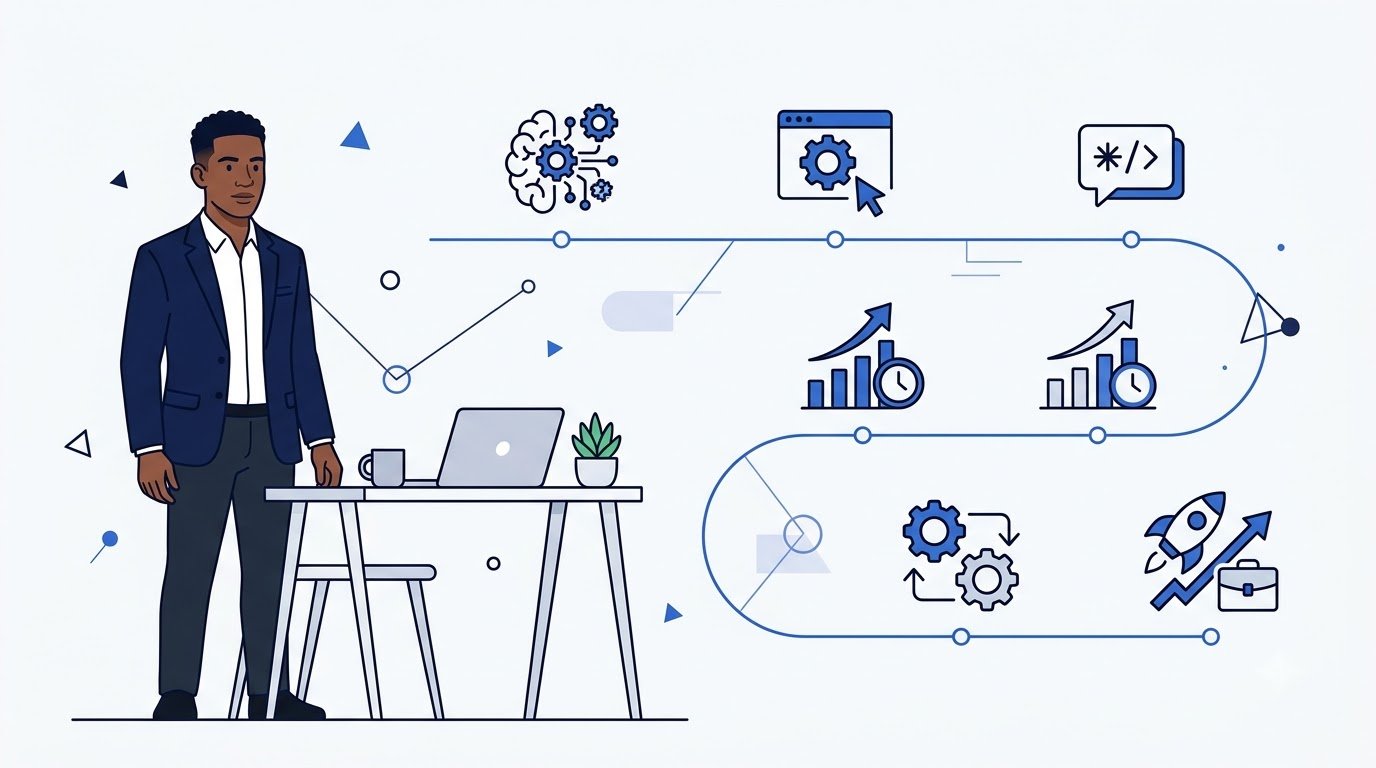
    Beginner Learning Roadmap

    If you’re just starting your AI journey, learning these topics in a logical order will make the concepts much easier to understand.

    1. Learn the fundamentals of Artificial Intelligence to understand what AI is and where it’s used.
    2. Study Machine Learning to see how computers learn from data and make predictions.
    3. Explore Deep Learning to understand neural networks and how they solve complex problems.
    4. Understand Generative AI, including how modern AI systems create text, images, and audio.
    5. Experiment with AI tools such as chatbots, image generators, and coding assistants to gain practical experience.
    6. Learn basic Python and data analysis if you’re interested in building AI applications.
    7. Continue exploring advanced topics such as Natural Language Processing, Computer Vision, Reinforcement Learning, and AI ethics.

    By building your knowledge step by step, you’ll develop a strong foundation for understanding both today’s AI technologies and future innovations.

    Frequently Asked Questions (FAQ)

    What is the difference between AI, Machine Learning, and Deep Learning?

    Artificial Intelligence (AI) is the broad field of creating systems that can perform tasks requiring human intelligence. Machine Learning (ML) is a subset of AI that enables computers to learn patterns from data. Deep Learning (DL) is a specialized branch of Machine Learning that uses multi-layered neural networks to solve complex problems such as image recognition, speech processing, and natural language understanding.


    Is Deep Learning part of Artificial Intelligence?

    Yes. Deep Learning is a subset of Machine Learning, which itself is a subset of Artificial Intelligence. This means every Deep Learning model is an AI system, but not every AI system uses Deep Learning.


    Can Machine Learning exist without Deep Learning?

    Yes. Many Machine Learning algorithms, such as Decision Trees, Random Forests, and Support Vector Machines, do not rely on Deep Learning. These algorithms are often effective for structured data and require less computational power.


    Which is better: Machine Learning or Deep Learning?

    Neither is universally better. Machine Learning is often more suitable for smaller datasets, structured data, and problems where interpretability is important. Deep Learning excels with large datasets and complex tasks involving images, audio, video, or natural language.


    Does Artificial Intelligence always learn from data?

    No. Some AI systems are rule-based and follow predefined instructions without learning from experience. Learning from data is a defining characteristic of Machine Learning and Deep Learning, not Artificial Intelligence as a whole.


    Why is Deep Learning so popular today?

    Deep Learning has become more practical due to advances in computing power, access to large datasets, and improved neural network architectures. These developments have enabled major breakthroughs in computer vision, speech recognition, language translation, and Generative AI.


    Do I need to learn Machine Learning before Deep Learning?

    Yes. Understanding the fundamentals of Machine Learning—such as data, features, training, and evaluation—provides a strong foundation for learning Deep Learning concepts and neural networks.


    Where is AI used in everyday life?

    AI is part of many daily experiences, including:

    • Search engines
    • Voice assistants
    • Recommendation systems
    • Spam filters
    • Navigation apps
    • Online shopping
    • Fraud detection
    • Customer support chatbots
    • Translation tools
    • Smart home devices

    Conclusion

    Artificial Intelligence, Machine Learning, and Deep Learning are closely connected, but they serve different roles within the broader field of intelligent computing.

    Artificial Intelligence provides the overarching goal of building systems that can perform tasks requiring human-like intelligence. Machine Learning enables these systems to improve by learning from data, while Deep Learning extends this capability through advanced neural networks that excel at handling complex, unstructured information.

    As AI continues to transform industries and everyday life, understanding these distinctions will help you make sense of emerging technologies, evaluate new tools, and build a stronger foundation for further learning.

    Whether you’re a student, professional, entrepreneur, or simply curious about AI, mastering these core concepts is an important first step toward confidently exploring the rapidly evolving world of artificial intelligence.


    Continue Your AI Learning Journey

    If you’re new to AI, these topics provide a natural next step:

    1. What Is Artificial Intelligence? A Beginner-Friendly Guide (2026)
    2. What Is Generative AI? A Beginner’s Guide (2026)
    3. How Does ChatGPT Work? (upcoming)
    4. Best AI Tools for Beginners (upcoming)